Not a roadside station — better
So-re is a farmers market, not an official michi-no-eki. The village built it, then couldn't find anyone to run it. Twelve local women took it on.

Twelve village women started it when nobody else would. Six hundred farmers supply it now — and a cat sleeps at the door.
So-re is a farmers market, not an official michi-no-eki. The village built it, then couldn't find anyone to run it. Twelve local women took it on.
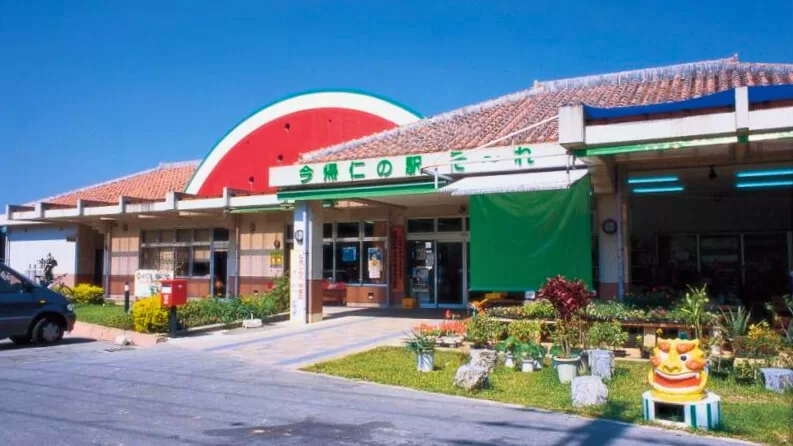
Nakijin is a designated production center for watermelon in Okinawa, and the building wears a giant slice of one on its roof. Summer is the season.
Nakijin Castle is about 4.5 km away. Pair the two, and add Kouri Island — this corner of the north is a half-day on its own.
Okinawa has plenty of farm shops. This one exists because twelve women in their village clothes decided it should — and then spent years knocking on farmers' doors until it did. The vegetables are excellent. The story is better.
How So-re happened
Nakijin Village built the building after residents asked for a place to sell what they grew. Then it advertised for someone to run it — and nobody applied. The job came with no salary: whatever you sold was what you earned.
Who stepped up
12 anmā"Anmā" is Okinawan for mother. Twelve women from the village lifestyle-improvement group volunteered, on the condition that sales were the only income.The first problem
No vegetablesA farm shop with no farmers. They drove to neighbouring farms one by one and talked growers into bringing produce in.Where it got to
600–700 farmsThat's the register today — the oldest supplier is 98 years old. A quarter-century later, So-re is village infrastructure.The company that runs it — incorporated in 2006, still women-run — describes the culture behind it plainly on its own website: in Nakijin, when someone arrives from outside, you don't ask questions. You say "come in, come in," and you make hirayachi pancakes or sata andagi doughnuts from whatever is in the house. So-re is that instinct, given a car park.
The market
Produce here is labelled with who grew it, and the staff will tell you to choose that way. Okinawan seasons arrive all at once, so the floor swings hard: a wall of tankan citrus in winter, tomatoes everywhere on a good spring day, and in summer the watermelons Nakijin is known for.
Look for pineapple, mango, passion fruit, apple bananas, sweet corn and chestnut pumpkin in season, and island vegetables you won't meet on the mainland — goya, handama, kwansou, mōi, nābērā gourd, Nakijin shimeji mushrooms and fresh wood-ear.
Okinawa's doughnut, made in the adjoining kitchen and sold warm — brown sugar, purple sweet potato, dragon fruit and mugwort.
Handmade daily in limited numbers, and frequently gone by early afternoon. Come before noon if lunch is the plan.
Nakijin brown sugar, So-re's own kōrēgūsu chilli awamori, Tamagusuku apiary honey, abura-miso, yōkan, Oppa milk, pineapple drinks and jams.
The farm restaurant · 11:30–14:00
Order at the register first, then take your ticket through to the dining room — the standard system at Okinawan farm canteens. The kitchen is certified by the prefecture as an Okinawa Shokuzai no Mise, a shop cooking with genuinely local ingredients.
Note: despite what some older guides say, there is no buffet here, and the restaurant is open again — it closed during the pandemic years and has long since reopened.
By car
About 1 hour 30 minutes from Naha Airport: take the Okinawa Expressway north to Kyoda IC, then Route 505 — roughly 40 minutes from the interchange.
Free parking on site.
By bus — honestly, no
There's no direct bus from Naha. You would ride to Nago Bus Terminal and take a taxi from there. Unlike Kyoda or Itoman, this one really wants a rental car — or a taxi as part of a Nakijin Castle trip.
157 Tamagusuku, Nakijin
Okinawa 905-0415
Tue–Sun 9:00–17:00 · restaurant 11:30–14:00 · closed Mondays · free parking
Open in Google Maps →This is exactly the kind of place where visitors get stuck — rural, no street-hail taxis, and foreign SIMs often can't dial Japanese numbers. Three ways that actually work:
Use an app. GO — Japan's main taxi app — works in Okinawa with an English interface. DiDi and Uber cover parts of the island. Install before your trip.
Dial with +81. From a foreign phone, replace the leading 0: 0980-XX-XXXX → +81 980-XX-XXXX. Wi-Fi calling works too.
Ask the staff — show them this:
タクシーを呼んでください
Takushī o yonde kudasai
So-re is in the middle of the north's densest cluster: a World Heritage castle, an island connected by bridge, and the aquarium, all within half an hour.
No. It's a farmers market and farm restaurant, not one of Okinawa's ten nationally registered roadside stations — which is partly why it still feels like a village shop rather than a tourist stop.
A farmers market and farm restaurant in Nakijin Village, run entirely by local women. It was started by 12 village women after nobody else volunteered to operate it, and is now supplied by 600 to 700 local farms.
The market is open Tuesday to Sunday, 9:00–17:00, and the restaurant serves 11:30–14:00. Closed on Mondays. (Some older listings still say 18:00 — that's out of date.)
No. The restaurant serves set meals ordered by ticket at the register. Bento boxes and side dishes are sold in the market and often sell out by early afternoon.
Not easily. There's no direct bus from Naha — you'd take a bus to Nago Bus Terminal and a taxi from there. A rental car is realistically required.
Sources
Nakijin no Eki So-re official site — hours, menu prices and the founding story, checked August 2026 · 今帰仁の駅そーれ(おきなわLovers 日本語版) · Okinawa Story and Okinawa CLIP features on the founders. Where our Japanese article and the official site disagreed — opening hours, and whether the restaurant is open — we followed the official site.