A visitor centre, not just a shop
Built on the site of the old village middle school and shaped after the Okinawan leaf butterfly. Inside: a 360° dome theatre, the village tourism office, and a rooftop deck.
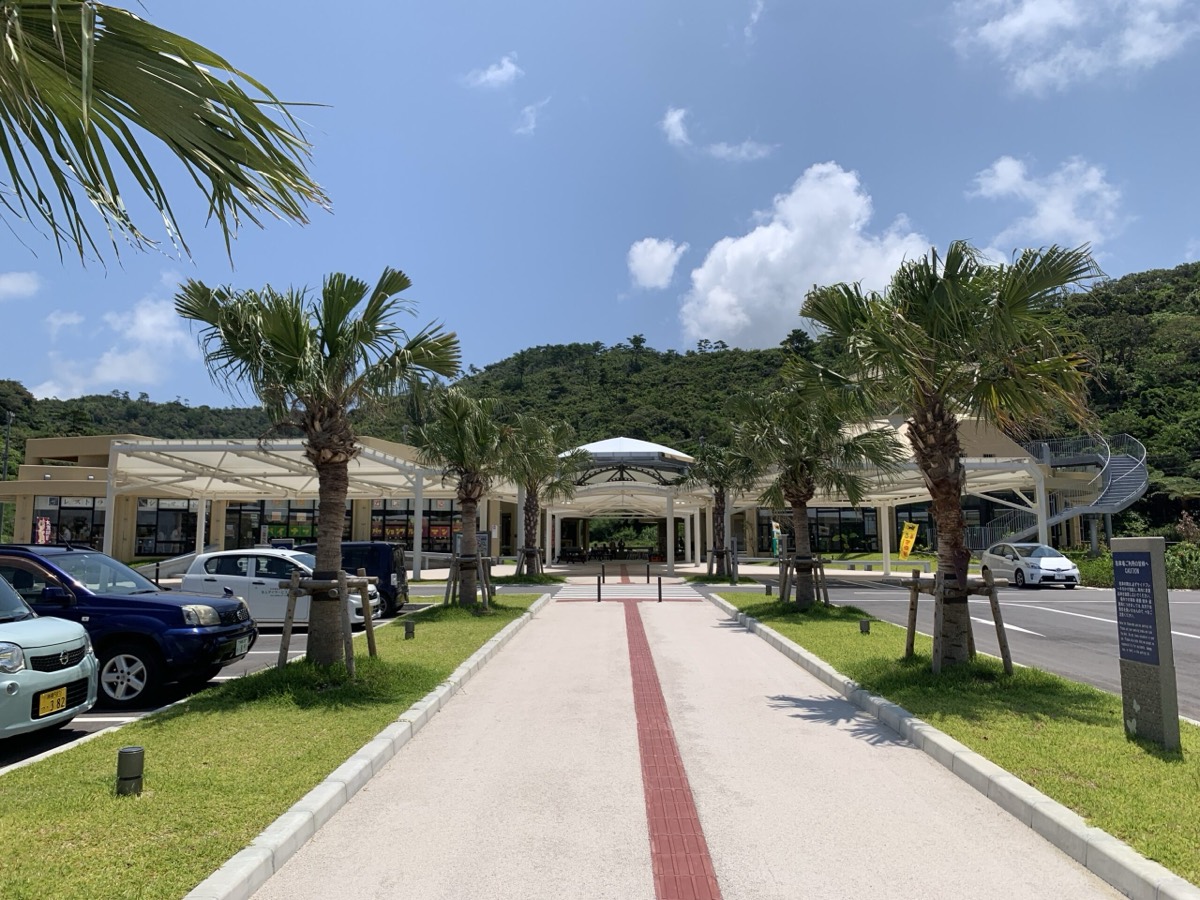
A visitor centre for the World Heritage forest, in the village that declared itself Japan's longest-living, and grows most of the country's shikuwasa.
Built on the site of the old village middle school and shaped after the Okinawan leaf butterfly. Inside: a 360° dome theatre, the village tourism office, and a rooftop deck.
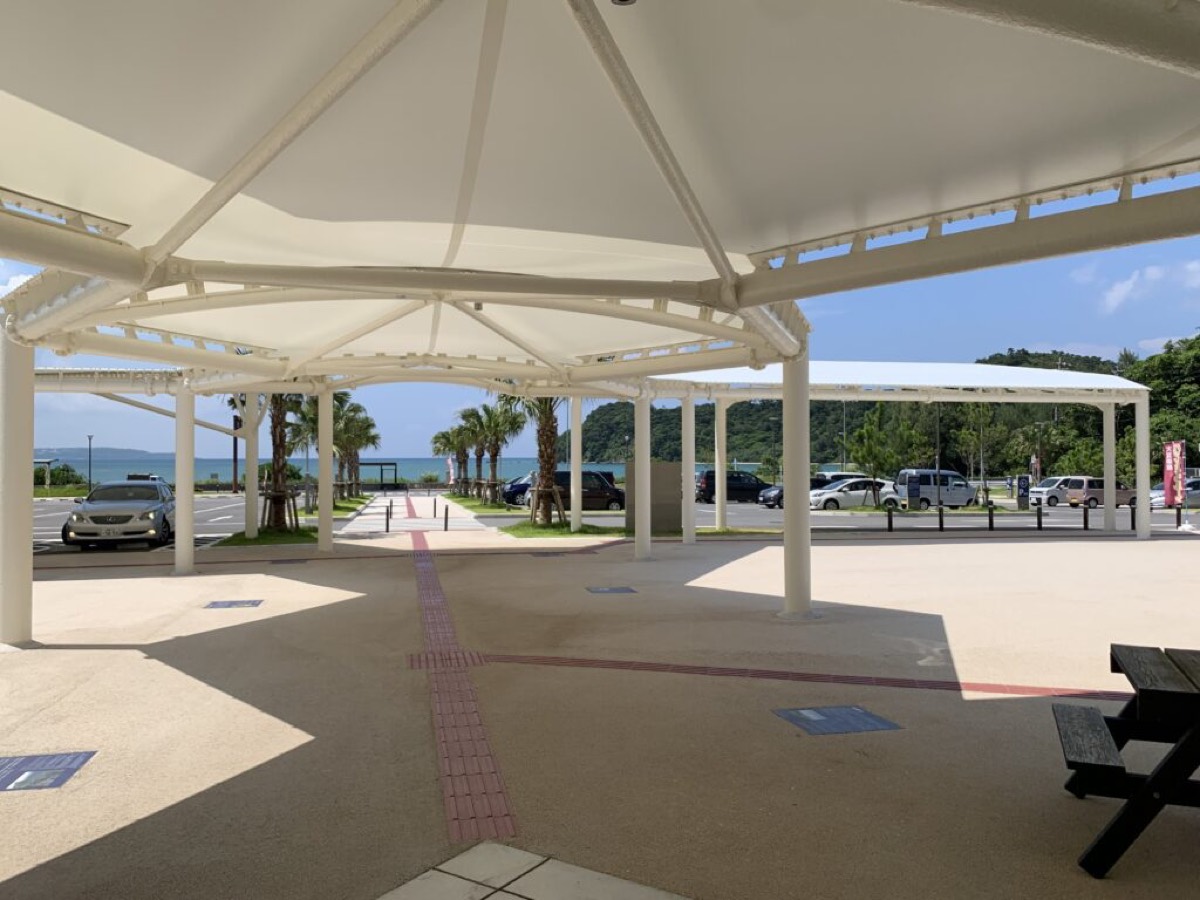
From the rooftop you look out over the East China Sea (as far as Kouri Island on a clear day) and turn around to the Yanbaru forest. Few buildings sit on that line.
Every part of this site closes on a different day: restaurant Tuesdays, parlour Mondays and Fridays, information centre Wednesdays. The shop stays open.
In 1993 the old people's association of Ogimi put up a stone declaring this Japan's village of longevity. Three decades later, foreign visitors come looking for the reason, and this is the building where the village explains itself.
The visitor centre
Yanbaru (the forest covering Ogimi, Kunigami and Higashi) joined the UNESCO World Natural Heritage list in July 2021. This station is where you get briefed before you go into it.
The dome theatre
360°A domed screen showing how to walk in the Yanbaru forest and why it matters, guided by bunagaya, the local forest sprite. The staff suggest lying down to watch it.The tourism office
3 villagesOgimi's tourism association is based here, and its staff live in Yanbaru. One counter for all three World Heritage villages.The rooftop
FreeSea one way, forest the other. On a clear day you can see as far as Kouri Island.The station also books activities (sea kayaking on Shioya Bay, hiking in the forest) and has coin showers for afterwards, plus bike hire. The way it frames the forest is worth noticing: not untouched wilderness, but woodland people have lived and worked in for centuries. That's a more honest story than most nature centres tell.
The fruit
Shikuwasa (the small, sharp Okinawan citrus) is grown almost entirely in Okinawa, and Ogimi accounts for over 60% of the prefecture's crop. Since Okinawa grows nearly all of Japan's shikuwasa, this one village supplies much of the country.
You can drink it here for ¥200 in the restaurant, or take it home from the market as juice, ponzu, vinegar, jam, dressing or sweets. Its association with the village's longevity claim (via a flavonoid called nobiletin) is why the fruit ended up on the world's wellness radar.
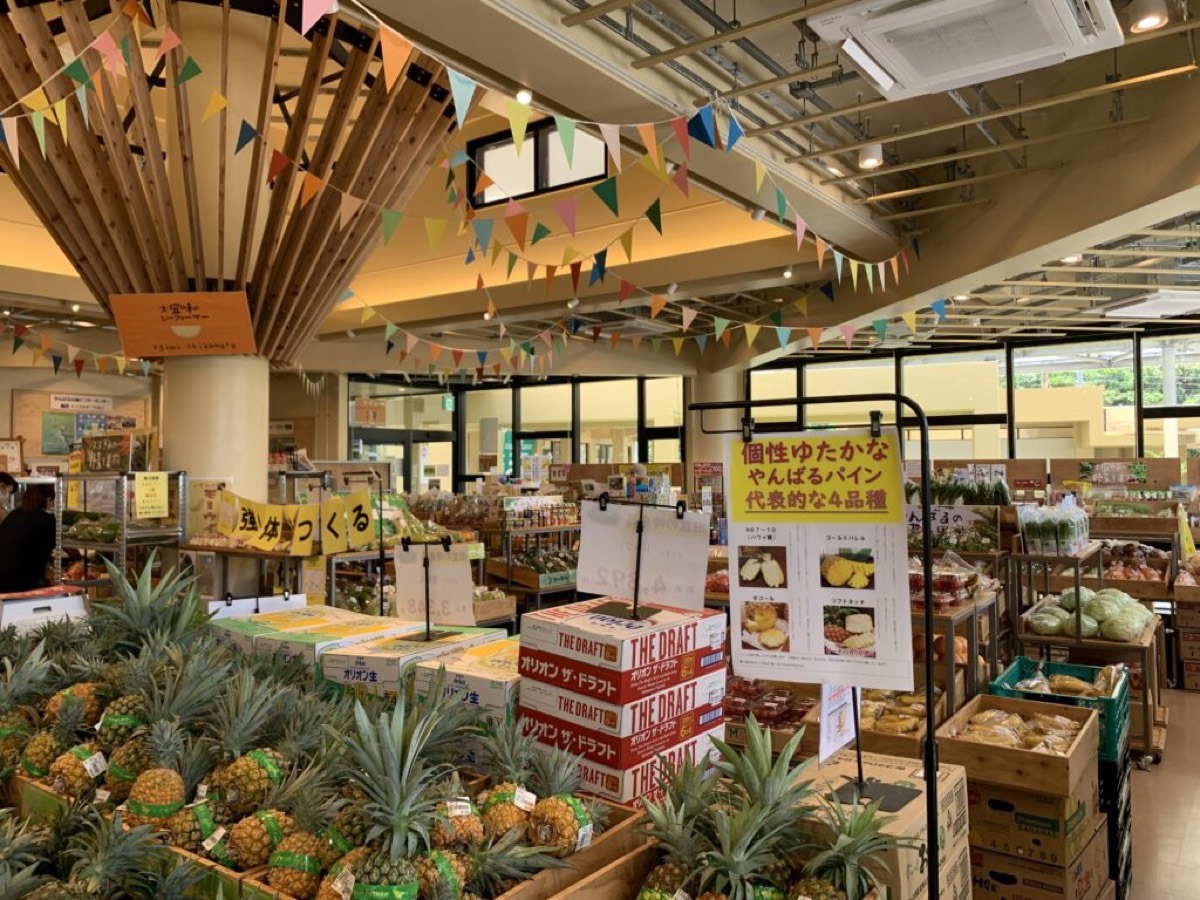
The restaurant, with an English menu. Plain Okinawa soba ¥600, stewed pork soba ¥800, sōki soba ¥900, taco rice ¥1,000, tempura set ¥1,200. Shikuwasa juice ¥200. 11:00–15:00, to 15:30 at weekends.
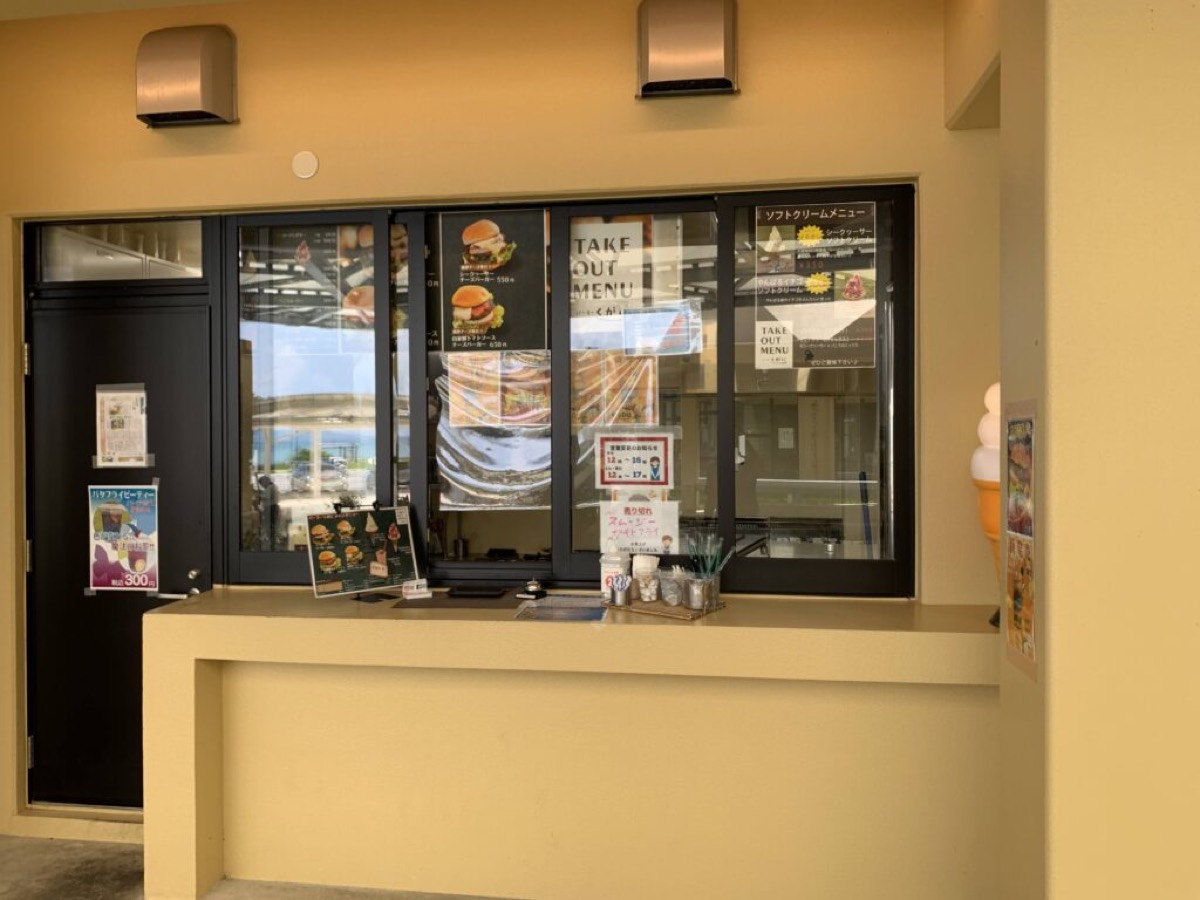
Kugani means golden, the colour of a ripe shikuwasa. Hence the shikuwasa burger, with a house sauce made from the juice. Also Okinawan tempura, sata andagi, and soft serve made with village strawberries. 11:00–16:00.
Yanbaru pineapple in four named varieties, mango, fish, vegetables, island tofu, eggs and chicken straight from local farms, and the full shikuwasa shelf. 9:00–18:00.
Yanbaru Seaside publishes its full menu, and these are the prices as of August 2026. The restaurant closes at 15:00 on weekdays, earlier than the market, so lunch here needs planning around.
By car
About 2 hours from Naha Airport. Expressway to Kyoda IC, then Route 58 north for roughly 40 minutes along the coast.
Free parking: 110 standard spaces and 9 for large vehicles. Toilets, parking and the payphone are open 24 hours, and there's Wi-Fi, but no EV charging.
By bus: the stop is at the door
The stop is called Michi-no-Eki Ogimi Visitor Center-mae and it's on the site. Route 67 (Hentona Line) reaches it from Nago Bus Terminal in about 30 minutes.
From the airport, take highway bus 111 or 117 to Nago (about two hours), or the slower 120. Services are infrequent, so check the timetable before committing.
95 Aza-Tsuha, Ogimi
Okinawa 905-1318
Shop 9:00–18:00 · restaurant closed Tuesdays · parlour closed Mon & Fri · info centre closed Wednesdays
Open in Google Maps →Ogimi is a village strung along one coastal road, and taxis are scarce. Three ways to get one:
Use an app. GO, Japan's main taxi app, works in Okinawa with an English interface. DiDi and Uber cover parts of the island. Install before your trip.
Dial with +81. From a foreign phone, replace the leading 0: 0980-XX-XXXX → +81 980-XX-XXXX. Wi-Fi calling works too.
Ask the staff. Show them this:
タクシーを呼んでください
Takushī o yonde kudasai
Ogimi sits on the coast road between Nago and the top of the island. It's the middle link in the northern chain, and the one where the forest starts to feel close.
It depends which part you want. The market is open daily 9:00–18:00, but the restaurant closes on Tuesdays, the parlour on Mondays and Fridays, and the information centre on Wednesdays. Plan around whichever matters to you.
A small, sharp Okinawan citrus. Ogimi grows over 60% of the prefecture's crop, and since Okinawa grows nearly all of Japan's, this village effectively supplies the country. Try it as juice at ¥200 before buying the ponzu.
If you're heading into the Yanbaru forest afterwards, yes. It explains what you're about to walk into, guided by the local forest sprite. There's no published schedule or price on the official site, so ask at the counter.
Yes, more easily than most northern stations. The stop 'Michi-no-Eki Ogimi Visitor Center-mae' is on site, served by route 67 from Nago Bus Terminal in about 30 minutes.
Sources
Michi-no-Eki Ogimi official site for hours, closing days and the May 2026 menu, checked August 2026 · Okinawa General Bureau for parking and facilities · Okinawa Bus route 67 timetable · 道の駅おおぎみ(おきなわLovers 日本語版). We corrected every opening time, added the closing days our Japanese article omits, fixed the bus routes, and dropped two menu items no longer listed by the restaurant.