The gateway to a World Heritage site
Yanbaru joined the UNESCO World Natural Heritage list in 2021. This station is the official visitor hub for the three villages that hold it: Kunigami, Ogimi and Higashi.
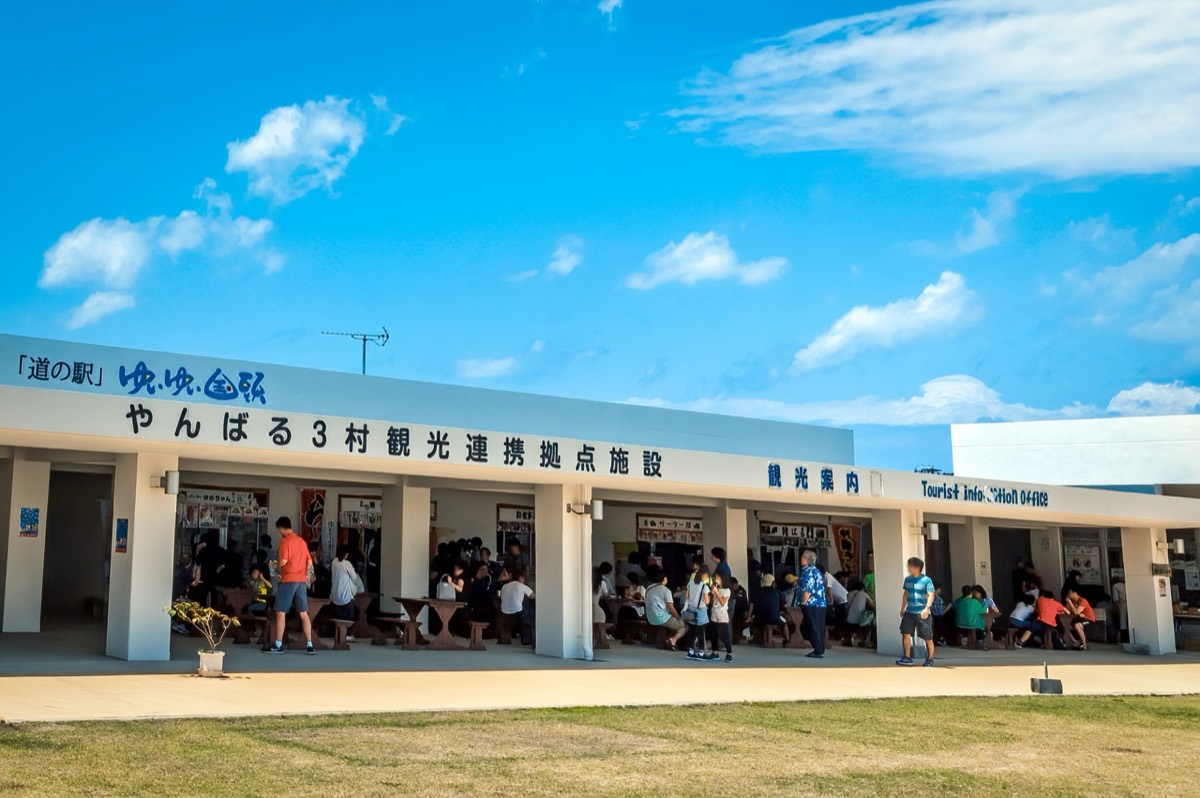
The northernmost roadside station on the main island, and the last place to stock up before the World Heritage forest begins.
Yanbaru joined the UNESCO World Natural Heritage list in 2021. This station is the official visitor hub for the three villages that hold it: Kunigami, Ogimi and Higashi.
North of here the shops thin out and the forest takes over. Fuel, food, toilets and information, then Route 58 keeps going to the cape.
The Okuma Beach Iriguchi stop is a one-minute walk away, served by route 67 from Nago. Rare this far north.
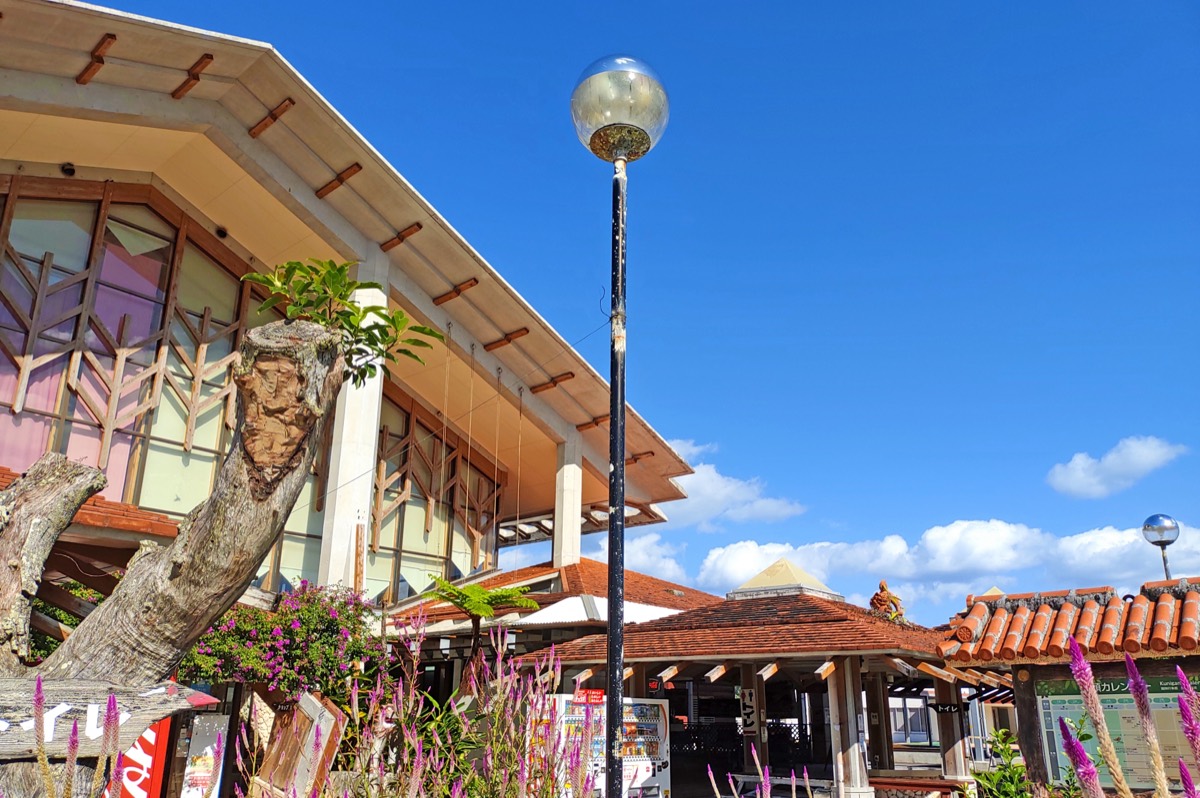
At some point on the drive north, Okinawa stops being a holiday island and becomes a subtropical forest with one road through it. Yui-Yui Kunigami is where that happens: the last building with a car park before the trees close in.
Yanbaru
In July 2021, UNESCO added "Amami-Oshima, Tokunoshima, northern Okinawa and Iriomote" to the World Natural Heritage list. The Okinawan part of that is Yanbaru, the subtropical forest covering the villages of Kunigami, Ogimi and Higashi, and a national park since 2016.
Okinawa rail
FlightlessYanbaru kuina: found nowhere else on earth, and unable to fly. A protected natural monument.Okinawa woodpecker
Noguchi-geraAlso endemic, also endangered, and the reason the forest roads have speed limits at dusk.Yanbaru long-armed beetle
Found 1983Japan's largest scarab beetle, discovered here only in 1983, an indication of how little of this forest was known.The donut, and the noodles
Three confectioners in the village (Miyazato, Carotte and Mori no Kobito) developed this together, and it's better than a roadside doughnut has any right to be: soy milk from the local tofu maker, prefecture-grown tapioca flour, and Kunigami pineapple or tankan citrus. No eggs, no dairy, no animal fat and no preservatives, which makes it one of the few things on an Okinawan road trip a vegan traveller can actually eat. ¥162.
Beyond that: kunjan pork, the village's own brand; karagi tea, a caffeine-free brew from Okinawan cinnamon leaves, sold here as a powder; tankan jam, Yanbaru salt, and the green tea from Kunigami, picked earlier in the year than anywhere else in Japan.
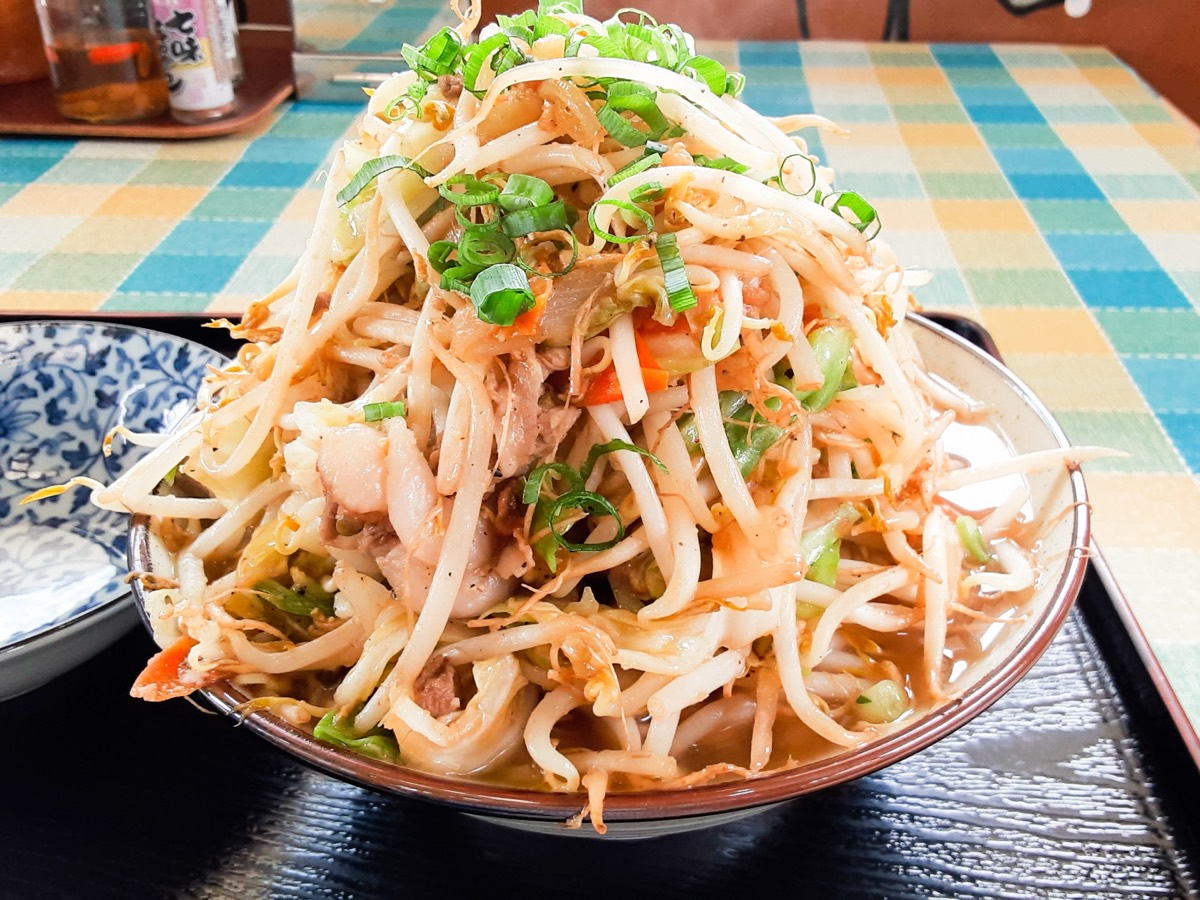
Restaurant Kuina for soba, a fish counter run with the local fishing co-op, Wā-yā for home cooking, Yui Cafe for baked goods, plus a burger shop, a curry parlour, a soba stand and a chicken shop.
The farm-produce corner: whatever the village grew this week, at village prices. Tankan citrus in winter, pineapple in summer.
Kunigami is famous for inobuta, a boar-pig cross bred here since 1981, leaner and higher in protein than pork. But the station states plainly that no shop here currently serves it: the animals take 15 months to raise and supply can't keep up. Read it as a story about the village, not a menu item.
The tallest waterfall on Okinawa's main island, 25.7 m, sits about 4 km away, and the walk to it is 1.5 km each way through forest and over a suspension bridge.
It is not open. Heavy rain in November 2024 closed the site, car park included, and Kunigami Village has not announced a reopening. Entry was ¥500 for adults and ¥300 for children. Check the village tourism association before you drive up.
By car
About 2 hours from Naha Airport. Take the expressway to its northern end at Kyoda IC, then Route 58 north for roughly another hour along the coast.
Free parking: 161 spaces by the road authority's count, including 10 for large vehicles and 7 accessible, plus 24-hour toilets and an EV charger. Mapcode 485 830 346.
By bus: yes, even here
Get off at Okuma Beach Iriguchi, one minute's walk away, on route 67 (Hentona Line).
From the airport: highway bus 111 or 117 to Nago Bus Terminal (about 1 hour 40 minutes), then route 67 for about an hour. Budget two and a half to three hours in total.
1605 Aza-Okuma, Kunigami
Okinawa 905-1412
9:00–17:45 (from April 2026) · free parking · 24-hour toilets · EV charger
Open in Google Maps →This is the far north: the least taxi-friendly corner of the island, and where a foreign SIM failing to dial a Japanese number really costs you. Three ways that work:
Use an app. GO, Japan's main taxi app, works in Okinawa with an English interface. DiDi and Uber cover parts of the island. Install before your trip.
Dial with +81. From a foreign phone, replace the leading 0: 0980-XX-XXXX → +81 980-XX-XXXX. Wi-Fi calling works too.
Ask the staff. Show them this:
タクシーを呼んでください
Takushī o yonde kudasai
Stuck somewhere else? Walk into the nearest roadside station or supermarket and ask the staff. Plenty of older locals here don't drive, so staff are used to calling taxis for customers, and some shops keep a free phone that goes straight to a taxi company. Don't rely on the numbers printed on signs and flyers: they almost never show the +81 form, and some leave out the area code (098 or 0980) altogether.
This is the top of the island. Everything else in the series is south of here, which makes Yui-Yui the turning point of a northern road trip rather than a stop along one.
Not a live one. The station has a photo spot and information about the bird, but the living birds are at Kuina no Mori in Ada, on the eastern side of Kunigami Village: 9:00–17:00, closed Wednesdays.
No, despite what several guides say. Kunigami's inobuta, a boar-pig cross bred here since 1981, is a genuine local speciality, but the station states that no shop on site currently serves it because supply can't keep up.
9:00–17:45 as of April 2026. Older listings saying 19:00 are out of date, and individual shops inside close earlier than the site does.
Yes. Take a highway bus to Nago Bus Terminal, then route 67 to Okuma Beach Iriguchi, a one-minute walk. Allow two and a half to three hours from the airport.
Sources
Yui-Yui Kunigami official site for hours, shops and the note on inobuta supply, checked August 2026 · Okinawa General Bureau for parking and facilities · Kunigami Village Tourism Association for Hiji Otaki · Ministry of the Environment for Yanbaru National Park · 道の駅ゆいゆい国頭(おきなわLovers 日本語版). We corrected the opening hours, the expressway exit, the parking count, and removed the claim that wild boar is served here.