Owned by the villages themselves
Ten hamlets north of Futami each put in ¥900,000 to start this. Most of the vegetables come from the growers' own back gardens. Buying here goes straight back to the community.
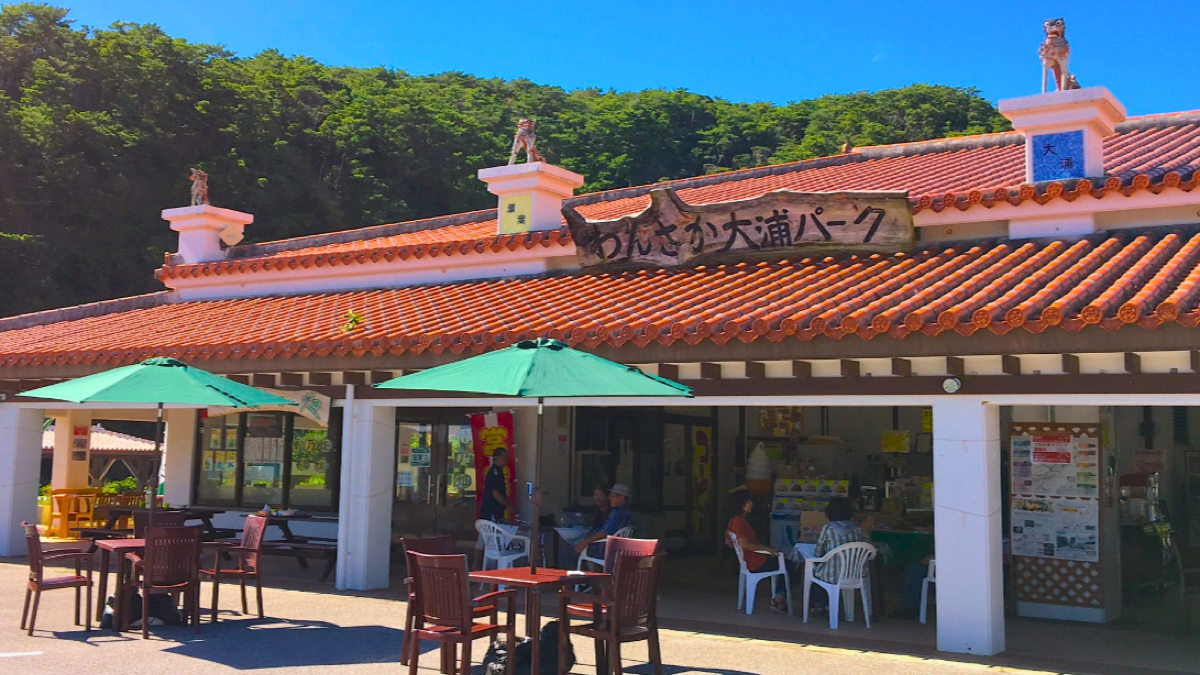
Ten hamlets on the quiet east coast put in ¥900,000 each and built their own shop. The mangroves out back are a designated natural monument.
Ten hamlets north of Futami each put in ¥900,000 to start this. Most of the vegetables come from the growers' own back gardens. Buying here goes straight back to the community.
The Oura River mangrove was designated a Nago City natural monument in 1995. A boardwalk runs through it for ¥400, or you can paddle it by kayak.
East coast means the sun comes up over the water. That's why the sunrise sea-kayak trip exists here and nowhere on the resort side.
Ataigwa is the Okinawan word for the small vegetable patch beside a house. That is literally where a lot of this shop's stock comes from, and it is also what they named the kitchen. Nothing about this place is designed for tourists, which is exactly the appeal.
The Oura River
The mangrove behind the park is among the largest on Okinawa's main island and has been a designated city natural monument since 1995. The boardwalk is the easy version; the kayak is the good one.
Mangrove Road, unguided
¥400
¥200 for primary school, free under 6 · fees maintain the boardwalk and the forest
Mangrove kayak
¥8,800About two hours, drone photography included. ¥4,950 for ages 3 to primary school.Sunrise sea kayak
¥13,200About 90 minutes on Oura Bay as the sun comes up. The east coast's own trip.Guided boardwalk
¥5,500Two hours with a guide, minimum two people, book by 17:00 the day before.Practicalities: no food, drink or pets on the boardwalk, and no toilets or vending machines once you're on it, so go before you start. Opening hours for the trail differ between the park's own pages, so check on the day; last entry is an hour before closing.
Ataigwa Kitchen · added 2024
The 2024 refit added a restaurant and a big playground. The kitchen cooks Okinawan home food from whatever the village patches produced that week. The daily plate is ¥1,400, the miso-soup set ¥1,000, and Okinawa soba runs from ¥650 for a plain bowl to ¥950 for the house special.
For children there's a ¥650 plate and a ¥650 pumpkin keema curry. Weekday service 11:00–14:30, weekends to 15:00.
Over a hundred kinds of vegetable and forty kinds of fruit across the year, plus the heirloom Futami aka-karashina mustard greens and agu pork.
Own-brand goods worth the shelf space: andansu oil miso, a chilli-sesame stir-fry of the local mustard greens with agu pork, pumpkin curry bread, custard pudding made with Yagaji eggs, shikuwasa cheesecake, and a shikuwasa andagi doughnut made with the peel of local fruit.
There's craft too: bingata dyeing, plaster shisa, and bamboo and gettō basketry from a local heritage group.
Slides and trampolines shaped after mangrove creatures, and the design was chosen by a vote among local nursery and primary school children.
Hot showers, changing rooms and lockable storage, because half the visitors here have just come off the water.
A beef specialist added in September 2024, open 11:00–19:00, later than anything else on site. Closed Wednesdays.
The park is run by ten local settlements, and the entry fee funds the boardwalk rather than a profit. Note that the official site gives two different sets of opening hours for the Mangrove Road, so ring ahead if you are arriving early or late in the day.
By car
About 90 minutes from Naha Airport: expressway from Naha IC to Ginoza IC, then across to the east coast. On ordinary roads (Route 329) it's about 150 minutes.
From Nago city hall it's about 20 minutes on Prefectural Route 18. Free parking: 46 cars, 3 coaches, 2 priority bays.
By bus: with a taxi at the end
Highway bus 111 to Ginoza IC, then route 77, getting off at Futami Iriguchi. Services are sparse and it's a further hop to the park, and the operator suggests a taxi from the stop.
Note: the airport shuttle to Kanucha Resort passes nearby, but tickets are not sold here and cash isn't accepted on board, so buy online in advance. Kanucha itself is about 10 minutes away by car.
465-7 Aza Oura, Nago
Okinawa 905-2267
Shop 10:00–17:00 weekdays, from 9:00 weekends · closed 2nd & 4th Wednesdays · free parking
Open in Google Maps →The east coast of Nago is thinly served, and the operator itself suggests calling a taxi from the bus stop. Three ways to do it:
Use an app. GO, Japan's main taxi app, works in Okinawa with an English interface. DiDi and Uber cover parts of the island. Install before your trip.
Dial with +81. From a foreign phone, replace the leading 0: 0980-XX-XXXX → +81 980-XX-XXXX. Wi-Fi calling works too.
Ask the staff. Show them this:
タクシーを呼んでください
Takushī o yonde kudasai
Stuck somewhere else? Walk into the nearest roadside station or supermarket and ask the staff. Plenty of older locals here don't drive, so staff are used to calling taxis for customers, and some shops keep a free phone that goes straight to a taxi company. Don't rely on the numbers printed on signs and flyers: they almost never show the +81 form, and some leave out the area code (098 or 0980) altogether.
Oura is on the east coast north of Nago, where the road goes quiet. The nearest stations are all a drive away. This is a destination rather than a stop.
No. It's a community-run farm stand, officially a Nago City community hub facility, operated by a company the ten local hamlets formed, each contributing ¥900,000. It calls itself a seaside farm stand, not a roadside station.
The second and fourth Wednesday of each month. E-Cafe closes every Wednesday. Some listings say Tuesdays. That's wrong.
¥400 for adults, ¥200 for primary-school children, free under six. Guided walks are ¥5,500 for about two hours, minimum two people, booked by 17:00 the previous day. Kayak trips run from ¥8,800.
With difficulty. Highway bus 111 to Ginoza IC, then route 77 to Futami Iriguchi, and the operator recommends taking a taxi from there. A rental car is much simpler.
Sources
Wansaka Oura Park official site and its kayak site for hours, prices, menu and the founding structure, checked August 2026 · Ryukyu Shimpo on the 2024 refit · Nago City Tourism Association · WWF Japan and Okinawa Prefecture publications for the Oura Bay species surveys · わんさか大浦パーク(おきなわLovers 日本語版). We corrected the closing day, the weekend hours, the driving time and the bus route number, and removed the claim that shuttle tickets are sold here.