OL Okinawa Lovers
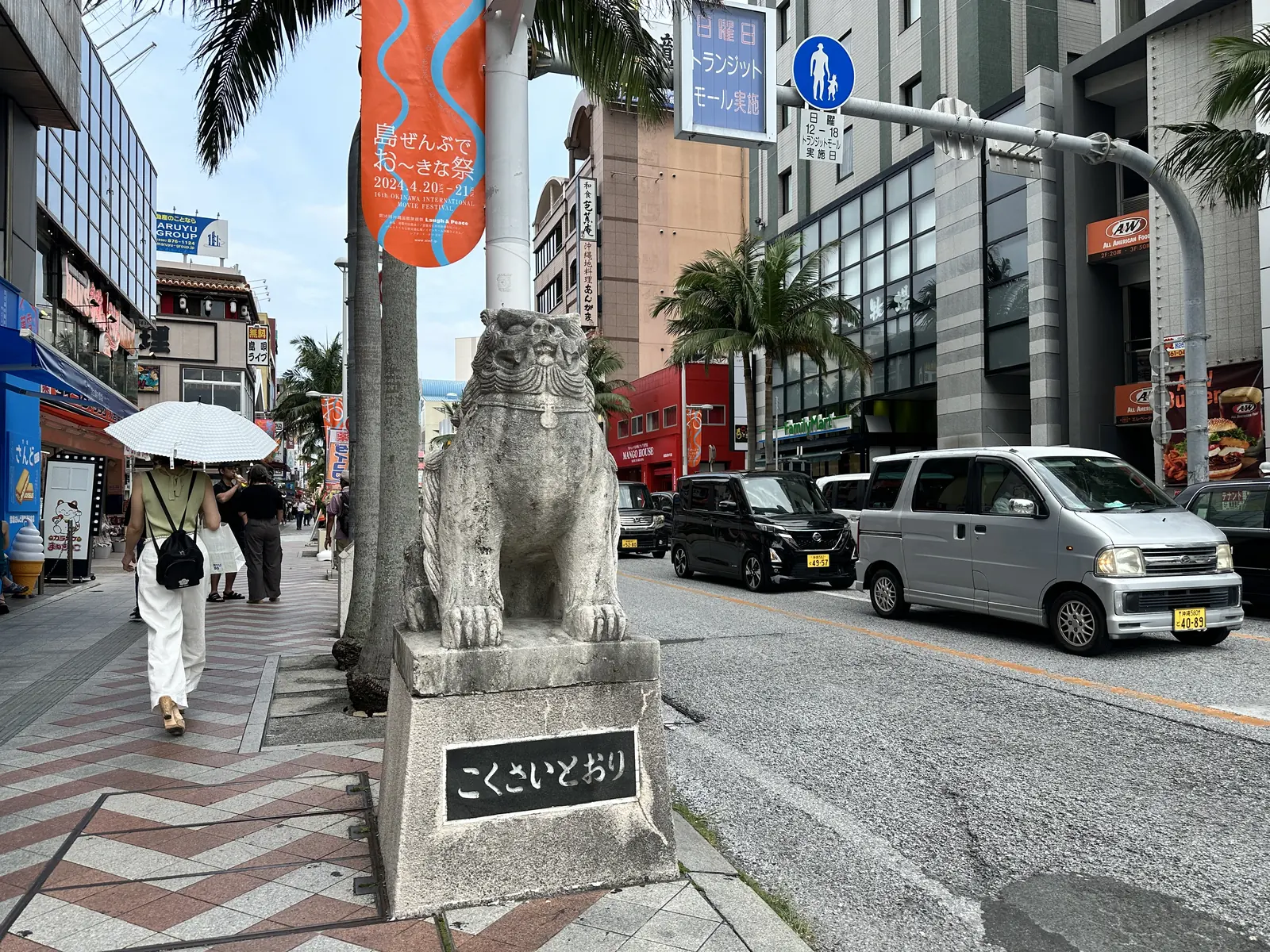
A stone shisa on its plinth at the entrance to Kokusai-dori, the main shopping street in Naha
The rule change

Tax free,
rewritten in November

For years the deal was simple: show a passport, pay no consumption tax. From 1 November 2026 you pay the tax first, and get it back only after you have left.

Until 31 Oct: no tax at the till From 1 Nov: pay, then refund Sealed bags abolished Checked 3 August 2026
The switch lands on 1 November 2026Pay the tax in the shop · claim it back at the airport
What changes

Japan is not ending tax-free shopping. It is moving the moment you save the money — from the shop counter to after you have flown home.

On 1 November 2026 the system switches to what the government calls the refund method. Shops will charge you the full price with 10 percent consumption tax included. Japanese customs will confirm at your departure airport that the goods are actually leaving the country. Only then does the shop pay the tax back to you.

The reason is not the tourists who buy a box of sweets. Between April 2022 and March 2024, 690 travellers each left Japan having bought more than ¥100 million tax free — ¥233.2 billion between them — and the tax authorities say nearly nine in ten of the largest buyers were never caught at the border at all. The refund method exists to close that. Everyone else gets caught in the redesign.

Some of that redesign is genuinely better, and one part of it matters more in Okinawa than almost anywhere else in Japan: the sealed bag is going away.

Two different things are called "tax free"

only one of them changes in November

English-language guides mix these up constantly, and the difference decides whether anything on this page applies to you.

Duty free is the shop past security at the airport. It removes customs duty and, on drink and tobacco, alcohol and tobacco tax as well as consumption tax. You are already airside, so nothing has to be proved about taking the goods home. This is not changing on 1 November.

Tax free is the sign in the window on Kokusai-dori, at the malls and at Don Quijote. It removes Japanese consumption tax only, and it is the one being rebuilt.

A rough rule for Okinawa: if you bought it before you reached the airport security check, this page is about your purchase.

The DFS duty-free shop beside the departure gates inside Naha Airport
Duty free at Naha Airport, past security by gates 21–28. This is the system that is not changing.

What changes on 1 November

the same discount, collected at a different moment
 Until 31 October 2026From 1 November 2026
At the tillYou pay the price without consumption taxYou pay the full tax-inclusive price
Getting the moneyImmediately, as a deductionRefunded by the shop after customs confirms your departure
Food, drink, medicine, cosmeticsSealed in a bag you must not open in JapanNo sealed bag. Open it and use it
Limit on consumables¥500,000 per shop per dayNo limit
Minimum spend¥5,000 for general goods and ¥5,000 for consumables, counted separatelyOne combined total
"For ordinary personal use"The shop has to judge itTest abolished
Deadline to leaveNot specified this way90 days from purchase
Sending it home separatelyThe separate-dispatch route was abolished in April 2025. Direct shipping abroad arranged by the shop itself continues.

The ¥5,000 minimum is judged on the tax-exclusive price, per shop per day, as it is now. Gold bullion and similar items stay outside the scheme, and the government has said it will add specific product categories to that exclusion list if new abuse appears. Above ¥1,000,000 before tax, shops send identifying details such as brand, model and serial number to the National Tax Agency, and customs may ask you to produce the certificate of authenticity or the warranty card together with the item.

The part nobody is complaining about

Four rules disappear
on the same day

The refund method is stricter at the border, so the government has dropped the rules that existed to stop you from consuming tax-free goods inside Japan. For a food island, this is the real story.

01

The sealed bag

Sweets, awamori, cosmetics and medicine are currently heat-sealed in a clear bag you are not allowed to open until you leave. That packaging requirement ends, so a week of shopping can finally be repacked into one suitcase. The goods still have to leave Japan with you, though. Anything eaten or used here fails the customs check and is not refunded.
02

The ¥500,000 ceiling

Consumables are capped at half a million yen per shop per day today. The cap is abolished, along with the whole idea of counting consumables separately.

03

Two separate minimums

Right now ¥3,000 of sweets and ¥3,000 of pottery qualify for nothing, because each category needs its own ¥5,000. From November they are simply one basket — which changes the maths on boxes of sweets to hand out.

04

"Is this for ordinary use?"

Shops currently have to judge whether your purchase looks like personal use rather than resale, which is why some refuse tax-free service on multiples. That test is gone.

What you actually get back

eight percent or ten, depending on what it is

Japanese consumption tax is 10 percent on most things, but 8 percent on food and non-alcoholic drink under the reduced rate. Most of what people carry out of Okinawa is food, so the refund is usually the smaller number.

Awamori is the exception people get wrong. It is a drink, but it is alcohol, so it is taxed at the full 10 percent.

The figures below are the tax already inside a ¥10,000 tax-inclusive price — which, from November, is the number you will actually be handing over at the counter.

!
A refund is not a discount you can spend on the trip. From November the money arrives after you have gone home, so budget the full price while you are here.
¥10,000 of Okinawan sweets
≈ ¥741
Food, reduced rate 8% · chinsuko, yukishio sweets, beni-imo tart
≈ ¥909

¥10,000 of awamori

Alcohol is charged at the standard 10 percent rate, not the food rate.

≈ ¥909

¥10,000 of cosmetics

Standard 10 percent. The same applies to pottery, glass and textiles.

The ninety-day clock

new, and easy to miss
Day 0
You buy something

You show your passport, pay the full tax-inclusive price, and the shop files the purchase record electronically. Nothing is sealed and nothing is refunded yet.

Within 90 days
You leave Japan

At the airport you present your passport and, if asked, the goods. Buy on 1 September and the confirmation has to happen by 30 November.

After confirmation
The shop refunds you

Customs confirmation reaches the shop through the National Tax Agency's system, and the refund follows. Shops are expected to be able to outsource this step to an approved operator.

Day 91
Or it simply becomes a taxed sale

No confirmation inside the window and the purchase is treated as an ordinary domestic sale. There is no refund and nothing to appeal.

Ninety days is generous for a holiday and awkward for anyone on a long stay, a working-holiday visa or a multi-stop trip that loops back through Japan later.

The government's own worked example is a traveller who buys on 1 August, buys again on 1 October, and clears customs on 1 December. The October purchase qualifies. The August one does not.

Confirmation is also handled per purchase record. If customs asks to see what is on a receipt and part of it is not with you — eaten, given away, already posted home — every item on that receipt can lose its tax-free status, not just the missing one.

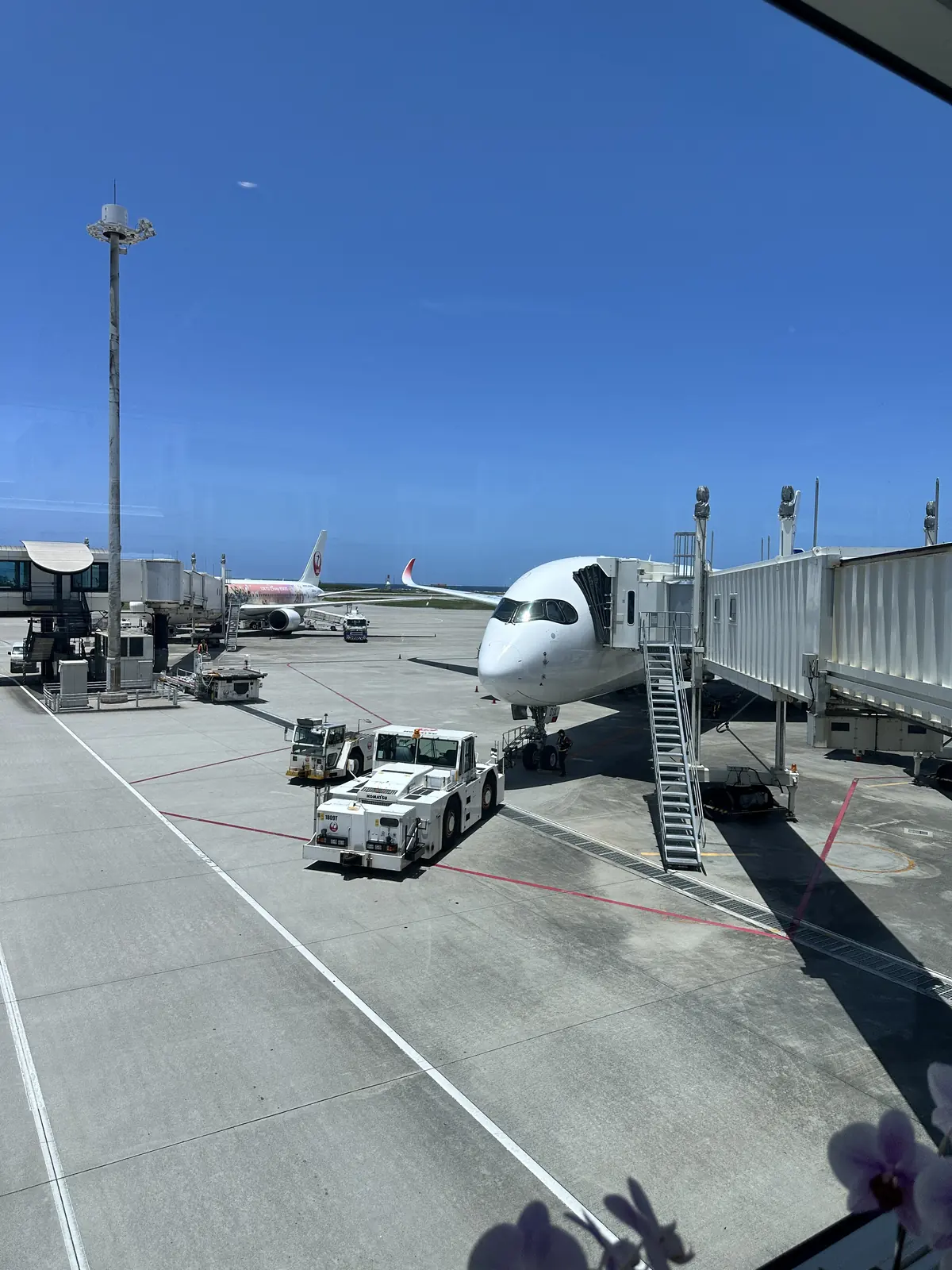
An aircraft parked at a boarding gate at Naha Airport
Naha Airport. From November the confirmation happens before you reach the gate, not after.

What you do at the airport

and where the queue moves to

Today the passport check happens airside, at the customs desk after security. Under the new method the plan is to move it landside, to kiosk terminals in the departure lobby — so it becomes something you do on the way to check-in rather than on the way to the gate.

1

Find the kiosk in the departure lobby

Terminals are to be installed at airports and seaports nationwide, in the general area before security.

2

Scan your passport

Japan's tax-free purchase records are fully electronic, so there is no European-style step of feeding paper receipts into a machine. The record is already attached to your passport.

3

Green, and you are done

A green result ends the process. You keep going to check-in and the confirmation is transmitted automatically.

4

Red, and you show the goods

A red result sends you to a customs officer, who may ask to see what you bought. Keep tax-free purchases out of a bag you are about to check in.

5

The refund follows later

Not at the kiosk. The shop pays you once it has the confirmation.

WhereDeparture lobby, before security — a change from today's post-security customs desk
BringYour passport, and the goods still accessible rather than checked in
Time itBefore you drop your bags, not after
If you skip itNo customs confirmation, so no refund from the shop. Leaving without the goods you claimed for can also mean the tax is collected from you, with a penalty on top

Naha is on the short list for the smoother version of this. The government's own traveller leaflet names seven airports where Visit Japan Web can be used instead of queueing at a kiosk, and Naha is one of them, with Narita, Haneda, Kansai, Chubu, New Chitose and Fukuoka. Each has a wi-fi zone reserved for the procedure inside the international departure lobby. Registering on Visit Japan Web before you fly also speeds up the counter in the shop.

What is still not decided

as of August 2026

Most English pages about this reform state the refund mechanics as if they were settled. They are not, and the honest answer is more useful to you than a confident one.

?

When the money actually lands

You register a refund method at the till, usually a credit card. Bank transfer, card, an app and cash inside the departure area are all listed as permitted. What no published document sets is how many days the shop has to pay you, and the official answer to "how do I get my refund" is simply that the shop will explain at the time of purchase. Ask before a large purchase.

?

Where the Naha kiosks go

Naha is confirmed as one of seven airports with a Visit Japan Web wi-fi zone in the international departure lobby. The physical kiosk terminals are committed nationwide, but no floor position or count has been published for Naha Airport itself.

?

Who handles it on Kokusai-dori

Shops can outsource the refund to an approved operator, and the big malls will. Whether the small independent shops along Kokusai-dori keep offering tax free at all, once it means chasing a refund after you have flown home, is the open question here. Nobody has announced anything either way.

If you are shopping in Okinawa

what the change means here specifically
The sealed bagOkinawa's signature purchases are nearly all consumables: chinsuko, yukishio salt sweets, beni-imo tart, shikuwasa juice, awamori. That is exactly the category sealed shut today, so the island gains more from the packaging rule ending than a shopping trip to Ginza does. The catch is that a box still has to fly home with you to earn its refund. Buying one to eat here is a normal taxed purchase now.
Roadside stationsMost farm markets and roadside stations here are not registered tax-free shops at all, and several are cash-first. Tax-free shopping in Okinawa is a town-and-mall activity, not a countryside one. All 20 roadside stations →
SupermarketsNor are the supermarkets. None of the main local chains advertises tax-free service, so treat the weekly shop and the tax-free shop as separate errands — and note that Okinawan supermarkets keep unusual hours, with some trading around the clock. Which chain, and when they open →
Where the shops areKokusai-dori in Naha, AEON MALL Okinawa Rycom in Kitanakagusuku — which has a tax-free counter on the ground floor as well as shops that process it themselves — San-A Urasoe West Coast PARCO CITY — whose tax-free counter publishes its hours, 10:00 to 22:00 — and Don Quijote, including the tax-free satellite store on Kokusai-dori that opened in June 2025 and trades from 8:00 until 1:00 the following morning.
AwamoriLosing the sealed bag does not change aviation rules. Bottles go in checked baggage, and anything above 24% ABV — which is most awamori, and all of the 60-degree hanazake from Yonaguni — is capped at 5 litres per person in retail packaging.
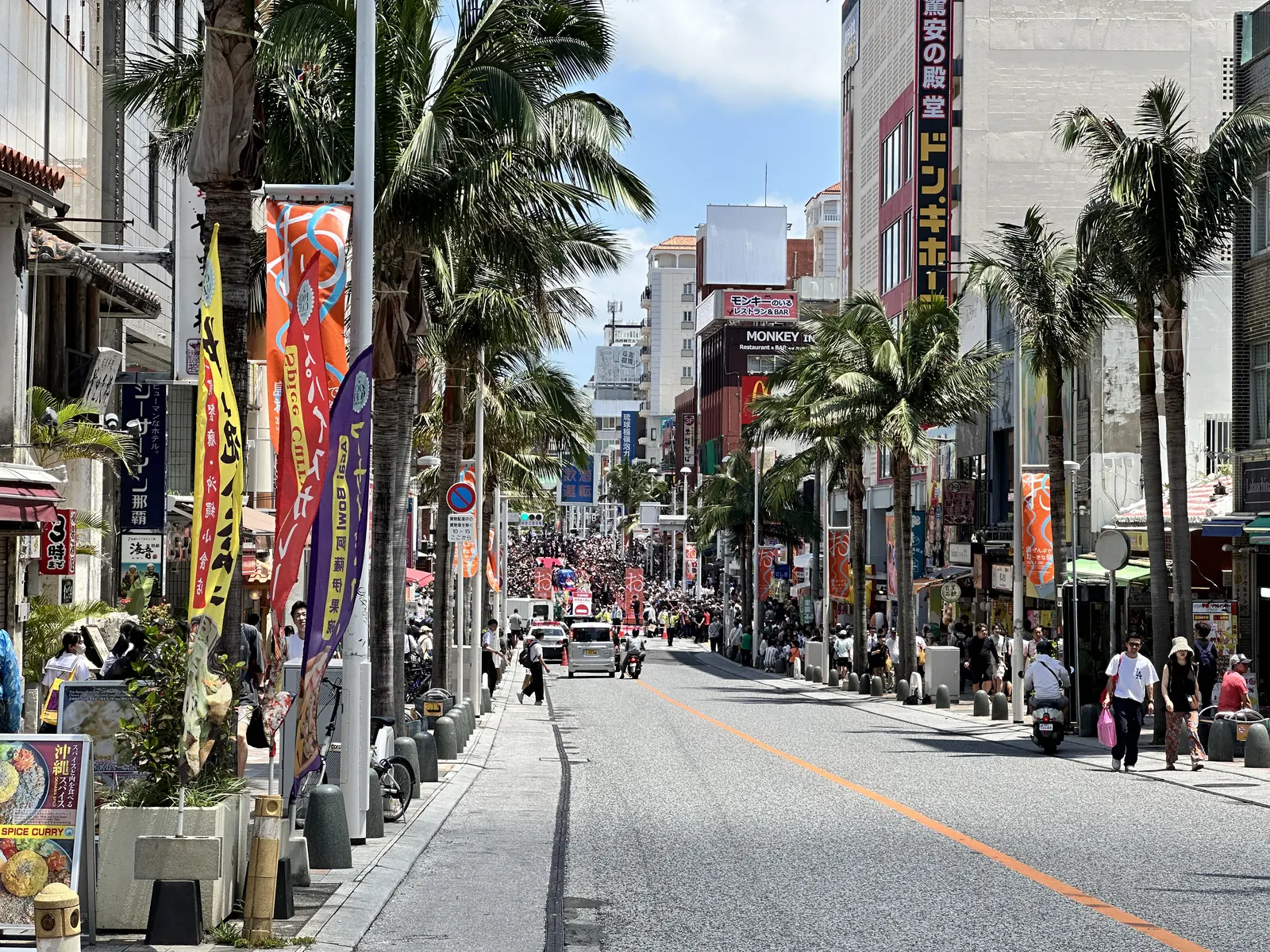
Banners and palms along Kokusai-dori, looking down the street in the afternoon
Kokusai-dori, Naha. The densest run of tax-free shops in the prefecture.

There is one timing quirk worth knowing if you are booking a late-2026 trip. Naha has two dates in the same month now: the tax change on 1 November, and Shuri Castle's main hall opening on 23 November, which is also the day castle admission goes from ¥400 to ¥1,000. The Naha guide covers that one →

Questions

Is tax-free shopping ending?+

No. You can still buy free of Japanese consumption tax as a foreign visitor. Only the timing changes: until 31 October 2026 the tax comes off at the till, and from 1 November 2026 you pay it and the shop refunds it after customs confirms you are taking the goods out.

Will I get cash at the airport?+

Possibly, but do not count on it. Cash inside the departure area is one of several methods the government lists as possible, alongside bank transfer, credit card and app payments. No single method is required, so it will vary by shop. Ask at the till before a large purchase.

Can I eat the sweets before I fly home?+

You can open the box, but not claim the refund on it. The sealed packaging disappears on 1 November 2026, and the government's own traveller Q&A answers this directly: food and cosmetics consumed inside Japan cannot pass the customs check, which means no refund. Worse, confirmation is done per receipt, so an eaten box can take the rest of that receipt down with it. If you want to eat it here, buy it as a normal taxed purchase. On ¥10,000 of sweets you are giving up about ¥741.

How much comes back on ¥10,000?+

About ¥741 on food and soft drinks, which carry 8 percent tax, and about ¥909 on everything else at 10 percent. Awamori counts as alcohol, so it is in the 10 percent group despite being a drink.

What if my flight is more than 90 days after I buy?+

Then that purchase does not qualify. The customs confirmation must happen within 90 days of the purchase date, and without it the sale is simply taxable. This matters for long stays and for trips that pass through Japan more than once.

Does duty free at Naha Airport work the same way?+

No, and it is not affected by this reform. Airport duty free sits past security, removes customs duty and alcohol and tobacco taxes as well as consumption tax, and hands you the goods airside. The November change applies to tax-free shops in town.

Sources

checked 3 August 2026