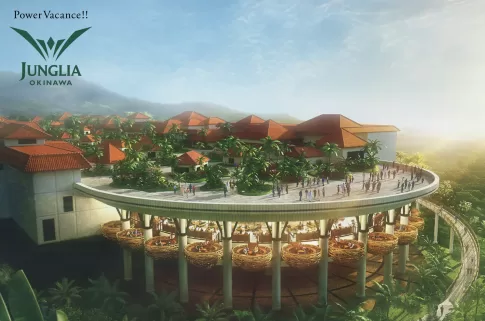

Jangria Okinawa, a new theme park in the Yanbaru Forest in northern Okinawa.
This “adventure resort” combines dinosaurs, nature, and hands-on activities to provide serious excitement for children and adults alike.
In this article, we have compiled a single practical overview from a family perspective, including “How to get around the park,” “Where to stay,” “Recommended meals,” “Model plans for 1 night/2 days & 2 nights/3 days,” and even “Tips on how to buy tickets at a reasonable price.
- 1 Things to do in the park (best route with children)
- 1.1 01|Gate to 30 minutes: First Response Routine First, tacticize the "first dash in the morning
- 1.2 02|Optimal sequence by age (2-3 hours in the morning)
- 1.3 03|"Where to put" matrix measures
- 1.4 04|Break plan (control of heat and tears)
- 1.5 05|"Energy-saving scoring" in the afternoon
- 1.6 06|"Alternative routes" for rain, strong winds, and high temperatures
- 1.7 07|Small tricks to increase "parental happiness
- 1.8 08|Rough daily timeline (approximate)
- 2 The Best Accommodations (It's All About Making a Base) - The Real World Edition
- 3 Best Dining (in and around the park, two-fold) - real-world version
- 3.1 01|Eat inside the park (directly related to crowd and heat control)
- 3.2 02|Eating around (Headquarters, Nakijin, Hotels)
- 3.3 03|Best Act by Time of Day (When in doubt)
- 3.4 04|Practices for allergies, baby food, and bringing your own food
- 3.5 05|Three food-preventive measures for "crying and dragging
- 3.6 06|Budgetary (approximate for a family of 4)
- 4 Model plan - real-world version that won't get lost in the field
- 4.1 Concept of access (optimal solution for each family type)
- 4.2 2 days and 1 night (weekend crunchers) minute sequence
- 4.3 3 days/2 nights (northern part of Japan) in increments of 3 days/minute sequence
- 4.4 Weather-specific and immediate rerouting
- 4.5 Judging traffic and waiting time "in terms of money".
- 4.6 "Optimal temps" by family type.
- 5 How to Buy Tickets (Deals & No Mistakes) - The Real World Version
- 6 Family Editing Memo (for checking on the day)
- 7 Recommended same-day routines (saved)
- 8 summary
Things to do in the park (best route with children)

01|Gate to 30 minutes: First Response Routine First, tacticize the “first dash in the morning
- 5 minutes before entering the park: Families decide on roles
- A: Mobile Ordering/Restaurant Reservations Officer (hold down the lunch hour)
- B: Baby stroller/luggage base attendant (quick to get a bench in the shade)
- C: Attraction status checker (checks the day’s operation, inspections, and crowding trends)
- The line of flow immediately after entering the park:
- Direct access to the streetcar (“warp” to the back of the park)
- Dinosaur area, then exploratory system, then big fish, then drop with high turnover.
- “Collect” the **smaller** (wait 15 minutes or less)** as you return.
Aim: Finish “big fish” in the morning when you have energy. After noon, we will focus on “shadows and water”.
02|Optimal sequence by age (2-3 hours in the morning)
Preschoolers (~6 years old)
- Go to the back by streetcar transfer.
- Maze/suspension bridge/trolley (active and not too scary)
- Dark place/loud sound direction is wait and see -> if OK, step up.
- Rest once at a photo spot (giant tree, etc.)
Goal: “We made it!” Build up the experience twice -> stable mood in the afternoon
Elementary school students (7-12 years old)
- Dinosaur Safari (morning)
- Mission-based exploration (immersive with stamping/riddle solving elements)
- 1 aerial type (if you meet the height requirement)
Goal: 1 big one + 1 achievement type + 1 thriller
Adults together.
- Switch to a more indoor/shaded experience during the day without overdoing it.
- Save the “visual experience” for later in the evening (evening view → fireworks → spa)
03|”Where to put” matrix measures
- Premium-based preferential rights:
- Introduction criteria: Waiting time is expected to exceed 45 minutes or the child shows signs of “not waiting” more than twice.
- Input: focus on only one of the dinosaur safari/airborne systems (if used for both, the stay design is likely to break down).
- Child switch (alternate ride):
- Arrangement: Report to staff at the entrance→non-boarding parents and children go to the shaded rest area →take turns boarding
- Advantages: Parents do not give up on their “wanting to ride” / Satisfaction level of older children does not drop
- Pseudo-fast-pass” thinking:
- Shift meal times (11:00s / 14:00s to avoid crowds)
- Go to popular attractions during the show (off the wave and shortened)
04|Break plan (control of heat and tears)
- Take a “sit-down” break once every 60-90 minutes (standing and eating continuously increases fatigue).
- HYDRATION RULE: One sip every 10-15 minutes for children. Rotation of flavored -> water -> ice cream
- Mist/shade map first (by the streetcar stop is a “mood recovery” base).
- Golden ratio of snacks: salt + sugar + cooling (salt crackers + frozen drinks, etc.)
Stroller operation:
- Find a “bicycle parking zone” before the suspension bridge and crowded area.
- Cool towel/mini fan on hook. Seating surface with cooling seat to reduce core temperature.
05|”Energy-saving scoring” in the afternoon
- After 15:00,go to the show/splash system (be sure to bring a change of clothes ).
- Early evening dinner atan indoor restaurant(around 5:00 p.m.), spa, and fireworks “cool-down three-step”.
- Souvenirs are previewed before 17:00 → pinpoint buying in the last 30 minutes
06|”Alternative routes” for rain, strong winds, and high temperatures
- Rain: maze/cave/indoor exhibit → long stay at indoor restaurant → collect photos in evening light rain
- Strong winds: high altitude/balloon systems backed off → focus on ground & indoor
- Extreme heat: Delay entrance to the park with the After 3 Plan / Hotel pool in the morning → full-scale play from 4:00 p.m.
07|Small tricks to increase “parental happiness
- Mobile photographers will take turns (to prevent the problem of “too much shooting and not enough fun”)
- Two “breakup/reunion points” agreed upon by the family (streetcar stop/main square)
- A drink in the evening: “Reservations after the bath” at the restaurant attached to the spa. Soft ice cream for children and non-alcoholic or mojito-style drinks for adults to end the story.
08|Rough daily timeline (approximate)
- 10:00 Entrance to the park → streetcar to the back
- 10:30-12:00 Dinosaur Safari / Exploration Activity
- 12:00-13:00 Lunch (indoor restaurant or outdoor food)
- 13:00-15:00 Distributed attack on aerial and hands-on systems (food carts to pass the wait time)
- 15:00-17:00 Show / Cool down with splash system (change of clothes required)
- 17:00-18:00 Souvenir Area
- 18:00-19:30 Spa or evening restaurant → finish with fireworks
*Minimum 7-8 hours for major sites. During busy periods, leave some extra time for the next day.
The Best Accommodations (It’s All About Making a Base) – The Real World Edition
The first thing to decide is “Priority Value”.
- Distance first priority: enter the park first thing in the morning, nap, re-enter for fireworks at night… round-trip tolerance is important (closer to headquarters is advantageous).
- Facilities first: Maximize the value of the stay with pool/kids programs/bathroom/baby rentals, etc. (large scale in Nago and Onna is strong).
- Price first priority: Compress real unit price by weekdays, consecutive nights, and early bird discount (compare by total price including breakfast and dinner).
→Working hypothesis: Bringing preschoolers = distance group / Elementary school students + accompanying grandparents = higher satisfaction with facilities group.
(2) Area-specific “winning strategies” and sample designs
A. Nago and Onna areas (concentration of large resorts)
- Suitable families: elementary school age and up, accompanied by grandparents, pool life.
- Winning strategy: pool & kids activities → cool down at the hotel in the afternoon → park in the evening.
- Room selection: 40 sq.m. or more / Japanese/Western style room OR sofa bed / balcony.
- Meals: Buffet “avoiding children’s likes and dislikes” + live kitchen for parents’ satisfaction↑.
- Weakness care: 30-40 min drive to park -> fix morning departure at 7:30-8:30 (to avoid traffic).

B. Headquarters area (hub to Churaumi, Nakijin, and Kouri)
- Families: Preschoolers / Naps required / Sightseeing in the north on day 2.
- Winning strategy: “double feature” of park in the morning, nap, and re-enter in the evening.
- Room selection: Japanese-style room w/ Tatami corner, Bath and washing area are separated.
- Meals: Early dinner near the aquarium OR hotel buffet at 17:00 hrs. ahead of time.
- Weakness care: wide range of choices and large price difference -> **”Parking x Exit Distance “** also compared (fatigue on return trip is a big difference).

C. Ultra-wide resort (site is on the level of a “town”)
- Family: “Hotel is also a destination” with consecutive nights.
- Winning Streak: Day 1 = Hotel Complete / Day 2 = Park All Swing / Day 3 = Hotel Aftermath and no bumming around.
- Room selection: If you assume cart transportation, check the location of the building andthe distance to the breakfast room.
- Weakness care: long movement lines and easy to get lost → Marking on map at check-in (kids area, shaded benches, lounge).
3) “Four benefits” that make the difference between the plans.
- Guaranteed admission: No worries even on busy days. Zero stress in the morning is the best value.
- 1.5 Day Entry: From 3:00 p.m. on the day before + 1 day on the following day to take advantage of both “shortened time and cooler time”.
- Priority admission/pre-entry: Almost erase the a.m. wait for dinosaurs and aerial systems.
- Shuttle bus: Avoid parking lot congestion. Reduced driving fatigue after fireworks.
→ Judging not only by price but also by “time value (reduced waiting time)” converted into monetary value (family of 4 x 45 min. reduction = substantially larger).
(4) Reservation technique (lower real unit price)
- Early Bird x Consecutive Nights: 45-90 days in advance & 2 nights or more, total amount of “breakfast and dinner included” is converted to one night’s stay.
- Crossing days of the week: Saturday, Sunday, and Monday are cheaper than 2 nights on Friday and Saturday. Please consult with the school schedule.
- Meal strategy: Breakfast only + eating out in the area risks “child’s mood”. Including dinner is more cost-effective in the end.
- Payment: Be sure to read the discount for advance payment + cancellation policy (especially during typhoon season).
- After securing a room: Request crib/bed guard/step ladder/humidifier and other “equipment for children” at least one day in advance.
Best Dining (in and around the park, two-fold) – real-world version
01|Eat inside the park (directly related to crowd and heat control)
A. Indoor main dining room (daytime = view/nighttime = production)
- Best reservation: Lunch 11:10 or 14:10 / Dinner 17:00 (early turn around)
- Seat: Window side <center aisle> Window side. Strollers are more stable at the aisle end.
- Recommended order (example of 4 family members)
- Adult: Prefectural beef hamburger steak/grilled island vegetables + shikwasa dregs (not heavy)
- Share: Dinosaur “Egg”-inspired appetizers (photo-worthy)
- Children: Kid’s plate (staple food + protein + fruit for “belly x blood sugar stability”)
- Shortcut: Order dessert immediately after entering the restaurant to avoid waiting for it to be served.
- Aiming for fireworks: Enter at 17:00 → Leave at 18:15, plenty of time to move around.
B. Outdoor banquet (strongest live atmosphere)
- Use: When children are “bored and just before sleepy”. Re-ignite with sound and smell.
- Seat selection: 2nd row or later from sound (sound pressure may be too strong for preschool children).
- recommended order
- Extra-large 100% beef burger (request a cut -> “4 portions” for easy portioning)
- Bone-shaped puffs/flashy-colored popsicles (the “take a picture, eat it” ritual will put you in a good mood)
- Non-alcoholic “Tropical Mojito-style” for a change of pace for adults
- Heat protection: consult staff for shady side/near fan. Feel free to add ice.
C. Restaurant with spa (hole in the wall for dinner)
- Conducted by: Spa→hydration/salt refueling→changing clothes→restaurant.
- Suggested order: Tuna x mozuku x citrus cold / light pasta / dashi soup.
- Small trick: “Heavy fried foods after a hot bath” induce drowsiness → Lighten up before fireworks at night.
- Seating: View is good by the glass, children should be seated on the wall to create a sense of calm.
D. Food cart (for matrix control)
- Priority: popcorn (salt + sugar) -> island tofu buns -> ice cream -> zenzai.
- Rule: “Take a sip before lining up” (to prevent dehydration).
- Parent technique: Convert waiting time into playtime by asking children to ” Explore Mission: Find the Fat-colored Popcorn “.
02|Eating around (Headquarters, Nakijin, Hotels)
A. Royal Road in Hombu and Nakijin
- Okinawa soba restaurant: enter at 11:00am for early lunch. Half the noodles/more broth, preschoolers can go too.
- Old private house café: confirm in advance if floor seating or small seating is available. Call for stroller OK flow line.
- Restaurants with a view of the ocean: “first bite” at 17:00 → sunset → nighttime in the park is the most efficient.
B. Winning buffet in the hotel
- Stability of mood = “right to choose”. Let the child serve himself the first plate.
- Avoid the line: line up 10 minutes before the start of the event → preview the dessert first → eat the actual dessert last.
- Nutritionaldesign: carbohydrate + protein + fruit → avoid blood sugar spikes.
03|Best Act by Time of Day (When in doubt)
| time zone | Objective. | Where to Eat | What do you want? | aim |
|---|---|---|---|---|
| 10:30-11:00 | quick snacks | cart | Rice ball type / Salted rice cracker + water | Morning Endurance Keep |
| 11:10-11:50 | early lunch | indoor (court, pool, etc.) | Meat & Vegetable Set Meal/Kids’ Plate | Avoid afternoon crowds |
| Around 14:30 | cool down | cart | Ice cream/zenzai + electrolytes | Over the peak of grogginess and fever |
| 17:00-18:00 | early dinner | Indoor or with spa | Light main dish + soup | I don’t get sleepy before fireworks. |
| after the fireworks | judo choking (strangling) techniques | Next to hotel or spa | Soft serve ice cream/non-alcoholic | Satisfaction Max with “Ritual of the End |
04|Practices for allergies, baby food, and bringing your own food
- Advance declaration: Allergens/crossings allowed or not at the time of reservation (keep written form).
- Baby food: Check whether warming is supported/where the microwave oven is located.
- Milk: Is there a temperature range for hot water supply (70°C or higher) and ice for cooling available?
- Bring: Minimum required according to park regulations. Bags are zip-transparent and fast inspection.
05|Three food-preventive measures for “crying and dragging
- Snack 1 hour before entering the park (to prevent blood sugar bottoming out)
- Bite of jelly or small bag of snacks before queuing (quiet the beginning of the line)
- Drop three sets of salt + water + ice at 2pm (to reduce afternoon collapse)
06|Budgetary (approximate for a family of 4)
- Indoor restaurant: 2 adults, 2 children = 6,000-10,000 yen (including dessert)
- Outdoor banquet: ¥5,000-8,000 (based on sharing assumption)
- Cart refueling: 1,500-3,000 yen/trip
- Hotel buffet: 8,000-14,000 yen (varies by age and day of the week)
Criteria: Meal choices that lead to “shorter wait times” are a real bargain (more concentration in the evening = more attractions digested).
Model plan – real-world version that won’t get lost in the field
Concept of access (optimal solution for each family type)
- Preschooler + more luggage → Official direct bus: zero transfers, easy to put to sleep, strong traffic jam reading.
- Elementary school students and older + want to go sightseeing with side trips → Car rental: Rest at Michi no Eki Xuden → Lunch at Nago or Motobu → “Attack on the surface”.
- Cost first priority + Families accustomed to traveling → Bus + Shuttle: scooter the day before for number of buses & connections, 15-20 minute transfer cushion.
Small tip: If the arrival day is rainy, give priority to direct buses / If it’s sunny, take a rental car and plug in Kouri or the seaside.
2 days and 1 night (weekend crunchers) minute sequence
Day 1 (transfer & “after” entrance)
- 09:30-10:30 Departure from Naha (short stop at the Hsuuda IC if renting a car)
- 12:00 Arrive in the northern part of the city → Lunch (child can have noodles/donburi for a short time)
- 13:30 Hotel IN (leave luggage only)
- 15:00After admission ( one popular one at a cooler time + show )
- 15:10 Tram to the back
- 15:30 Only one dinosaur OR aerial system (put in if priority)
- 16:30 Splash type (must change clothes)
- 17:15 Early dinner (indoor or with spa)
- 18:30 Standby for fireworks → 19:00 Standby for fireworks
- 19:30-20:30 Leave the park→return to the hotel→cool down in the public bath or pool
Intention: “Don’t be greedy on the arrival day, but make sure to collect the night’s performances. Save energy for the next day.
Day2 (full stay)
- 07:15 Breakfast off peak→8:15 Departure
- 10:00 Entrance to the park → dinosaurs → exploration → aerial from the big ones
- 10:20 Dinosaur Safari
- 11:10 Exploration mission
- 12:00 Indoor lunch (11:10 reservation ideal)
- 13:00 Photo Spot → Food Cart (ice cream + electrolytes)
- 13:30 Aerial system (if the wait is too long, turn it over in the evening)
- 14:30 15 minute “sit-down break” indoors
- 15:00 Show/Splash
- 16:00 Souvenir sales → Secure souvenirs
- 17:00Spa 30-45 minutes if you can afford it → 18:00 Leave the park
- 19:30 Toward Naha (light meal on the way/avoid traffic)
Tip: Take two sides of the “delicious time zone” by using the after-sales slot plus the full slot on the following day.
3 days/2 nights (northern part of Japan) in increments of 3 days/minute sequence
Day1 (spectacular view and margins)
- Morning Naha→Lunch in Nago
- Afternoon Kouri Ohashi→Tinu Beach (Photo 5 – cut off in 10 minutes)
- 16:00 Hotel IN in Nakijin area → Swimming pool or walk on the beach
- 17:30 Early dinner (avoid crowds by eating ahead at 17:00) → bedtime
Intention: To ensure “scenery and physical recovery” on the travel day. To improve concentration on the next day.
Day2 (all day jungle)
- 08:15Departure→10:00 Entrance
- AM Dinosaurs → Exploration → Aerial (from the big one)
- 12:00 Indoor Lunch→13:00 Photo & Snack
- 14:00 Return to hotel for a 45-60 minute nap (preschoolers)
- 16:00 Re-enter the park for show & evening view → 17:30 Light dinner → 19:00 Fireworks
- 20:00 Leave the park→Take a hot bath at the hotel
Intent: to “break it up with a nap” and keep the focus on the evening performance.
Day 3 (cool down with history and greenery)
- 09:30 Ruins of Nakijin Castle (hat & beverage)
- 11:00 Fukugi (shady walk 20-30 min.)
- 12:30 Soba or A&W in Nago → 14: 00 To Naha
- Evening return of rental car → return home
Tip: Alternate offensive days (Day 2) x loose days (Day 1/3 ). The family’s mood is stable.
Weather-specific and immediate rerouting
- Rain: stay longer at indoor restaurant → go to cave/dark place system → retrieve in photos after rain.
- High winds: move high altitude/balloon systems to the evening → focus on ground & indoor
- Extreme heat: Switch to after-park admission / hotel pool in the morning → start at 4:00 p.m.
Judging traffic and waiting time “in terms of money”.
- Priority Entry/Priority Pass: 4 family members x (45 minutes shorter waiting time) = 3 hours total collection → 1,000-3,000 yen per person is still a real gain.
- Plan with shuttle: Zero driving burden and parking congestion at night = no fitness and no fighting.
“Optimal temps” by family type.
- Preschooler-centered: Headquarters overnight stay + 1.5 days admission (Day1 evening + Day2 morning -) / Nap pit stop design
- Elementary school students + grandparents: Nago / Onna large resort + priority admission or direct bus / evening view – fireworks for all
- Staying at a hotel for consecutive nights: Day 1 complete at a super-extensive resort → Day 2 Park → Day 3 Margins
How to Buy Tickets (Deals & No Mistakes) – The Real World Version
(1) What’s in the ticket and “how to use” (just the essentials)
- 1Day
Standard free pass. Attractions & shows are covered within the base price. This is the standard for the first time. - Spa stand-alone
A ticket to enjoy only hot springs, sauna, and relaxation. For days when you want to reset the temperature only at night. - Park & Spa 1Day
Park + Spa set. Cool down at the spa after the evening → keep your concentration until the fireworks.
Includes a discount on park food (500 yen in total). - Premium Pass (shorter wait times)
Additional options for each attraction. Dinosaur Safari, Aerial attraction, etc., “only one attraction that tends to be crowded” is the most cost-effective option. - Special tickets for prefectural residents (limited time only)
Priority admission and priority slots for specific attractions may be set during the period. If eligible, consider it a top priority.
(2) Approximate rates (table for easy family comparison)
Amounts are representative for clarity. Actual amounts may vary depending on the time of year and campaign.
| ticket type | adult | Children(4-11) | What’s included | To a family like this |
|---|---|---|---|---|
| one day | 6,930 yen | 4,950 yen | Attractions & Shows | First time, I want to ride all of them. |
| spa | 2,640 yen | 1,540 yen | Spa Facilities | Non-park use days/only want to set up at night |
| Park & Spa 1Day | 9,570 yen | 6,490 yen | 1Day + Spa + 500 yen food discount | Evening – evening emphasis and play until fireworks |
| Premium Pass (1) | 990-2,970 yen | same as on the left | Shortening the time for popular attractions | For crowded days and “no line up” measures |
| Special quota for prefectural residents (limited time) | change | change | Priority admission and priority experience may be included in the package. | Strong for Prefectural Families |
(iii) Where to buy?
- Official Online: Strongest in stock and up-to-date information. Electronic ticketing makes it smooth on the day of the event. This is the standard.
- Convenience store terminal: No internet required. Convenient for paper ticket holders and day-before procurement (availability depends on the day).
- Travel agency/accommodation plan: airfare + hotel + tickets in one package. Sometimes includes advance admission, 1.5 day park entry, shuttle, etc. In many cases, the cheapest price is the time value included.
- Same-day window: Assumption that you cannot buy during busy periods. Avoid except in case of emergency.
4) Apply with JAL Pack
Aim: To bundle transportation, lodging, and admission to the park in one package. It is easy to deal with flight delays and weather changes, and some products come with souvenir couponssuch as 1,000 yen worth of Gokashi-Goden, making it highly practical for family travel.
Application Process (3 Steps)
- Choose your itinerary, flights and hotels (Dynamic Package).
- Add “Jungleia 1 Day” or “1 Day + Spa” as an option.
- Enter the park locally according to the voucher/QR.Souvenir coupons are also received according to the terms and conditions and are immediately redeemed at the airport or Onna stores.
- The cost of arranging inventory crossings is reduced to zero (reducing the need to find, compare, and pay for them).
- Travel agency affiliates have a single point of contact for support in the event of inclement weather.
- Many products offer “time purchase benefits,” such as advance admission and 1.5-day admission, which increase the number of tickets consumed on the day of the visit, which in turn increases the level of satisfaction.
Airfare + Hotel + Park Entrance Package / Souvenir Coupon Plan available
5) How “profitable” is it?
A) Real discount for Park & Spa 1 Day
- Food discount of 500 yen for a family of 4 (2 adults and 2 children) → Immediate discount effect of 2,000 yen in total.
- In addition, a 30-45 minute break at the spa will keep the stall open until the fireworks at night = more attractions digested and the value of the experience will be upswept.
B) Time Value of Premium Pass
- Assumption: 45 minutes less x 4 family members = real savings of 3 hours.
- The 3 hours is enough time to add 2-3 medium-sized attractions with a small lineup plus 1 show. 990-2,970 yen per person is still an easy return on investment.
C) Total benefits of JAL Pack
- Buy airline tickets, hotels, and park entrance in bulk -> minor hassles pile up with inventory searches, settlements, and changes.
- If you buy in bulk + advance admission / 1.5 day admission / shuttle included, total wait time – 60-120 minutes is realistic.
- In addition, if 1,000 yen worth of souvenirs overlap with the number of family members, the effect is immediate and equivalent to cash.
(6) Failure avoidance (this is the only place where it must be done)
- Proof of Residency: Prices and offers for domestic residents are generally operated in a manner that requires registration/presentation of address and phone. If you forget, you will lose in the procedure.
- Refunds/changes of itinerary: In principle, non-refundable. During typhoon season, there are cases where it is possible to change the itinerary for a fee. Double check with the travel agent.
- Same-day tickets: During peak season, tickets are sold out.Advance purchase is the golden rule.
Airfare + Hotel + Park Entrance Package / Souvenir Coupon Plan available
Family Editing Memo (for checking on the day)
Mini Checklist of things to bring
- Change of clothes (tops/pants/underwear/socks) x number of people
- Quick-drying towel (2 small + 1 large) / Hat (a chin strap would be good)
- Drink (frozen water + room temperature)/powdered electrolytes
- Simple cold storage bag + refrigerant (reinforced with ice in guest room)
- Mobile fan / cooling towel / portable mist
- Insect repellent/sunscreen (SPF50, PA++++, sweat/water-resistant type)
- Zip bags (for wet items and small snacks)/wet wipes
- Adhesive bandage, antipyretic analgesic and anti-sickness medicine for children
- Mobile battery (2 cables)
- Spare mask (for dust and sun protection)
Shoe Guide
- Sandals that both parents and children can walk in OR sneakers that are OK to get wet.
- (A small amount of foot powder can be used to prevent shoe sores.)
Password (shared by family members)
- Morning = Attack (big game and photo)
- Afternoon = cool (shade, mist, splash, indoor)
- Night = shiru (spa → fireworks → smooth exit from the park)
Photo Spot and Order Tips
- Giant tree at the entrance (family photo/immediately after arrival)
- Dinosaur area (subject is at an “angle” to the ground / distance between dinosaur and child is 30-50cm)
- High deck with evening view (backlight = figures in the shade of trees / three-layered composition of “sky + forest + family”)
- Waterfront at night ( fixed railing for reflections + continuous shooting / one shot of fireworks with the “first big ball”)
Recommended same-day routines (saved)
Morning – Morning
- Hotel breakfast is off peak at 7:15 or 8:45
- Reapply sunscreen “just before leaving home”.
- Enter the park → streetcar to the back → dinosaurs → explore
Noon – Afternoon
- Lunch is served early at 11:10 or late at 14:10
- Sit down and take a break every 60-90 minutes (continuous standing and eating increases fatigue)
- Splash = change of clothes in -> straight to food cart for sugar + salt + water
Evening – Night
- Early dinner (light) at 5:00 p.m. → Spa 30-45 min.
- 18:30 Go to the fireworks position (smooth exit from the park with a side position near the entrance/exit side)
- After the fireworks, we “brought forward” our souvenirs and left the park to go directly to the hotel.
summary
- Jangria is a place where you can “experience” the forest, sky, and water and bring them back home.
- Don’t overpack / use the cooler time / end the evening with a spa and fireworks – this will take your satisfaction to the next level.
- If in doubt, just do them in the order of this article, remembering only the words: morning = attack / afternoon = cool / evening = close.