Golden Week
Roughly 29 April to 5 May. Four public holidays in a row. Flights and cars sell out months ahead, then the island empties for six weeks.
Okinawa's quiet months are June, May and January, and the island is fuller in March than at the height of summer. Not opinion: the prefecture publishes the arrival figures every month.
Most guides decide the best time to visit Okinawa by how it felt when the writer went. This one uses two published data sets: the prefecture's monthly arrival statistics, and the Japan Meteorological Agency's thirty-year normals for Naha.
There are no flight or hotel prices here. They move by route, by season and by how far ahead you book, and any figure we printed would be wrong within a month. What we can show you is the demand that moves those prices, and the weather that decides whether the trip works.
Two findings run against the usual advice. The island is not empty in winter. And the cheap months are cheap because of daylight, not because of cold.
Okinawa Prefecture counts everyone who arrives, every month, and publishes it. The table below is the domestic Japanese figure only. That is the number worth watching even if you are flying in from abroad, because domestic demand is what empties the hotels and the rental fleet. When Japan comes to Okinawa, there are no cars left, whatever your own country's holiday calendar says.
| Month | 2025-26 | 2024-25 | 2018-19 | Index |
|---|---|---|---|---|
| January | 601,400 | 566,800 | 523,700 | 90 quiet |
| February | 623,500 | 606,400 | 532,100 | 94 |
| March | 738,400 | 716,200 | 657,400 | 111 2nd busiest |
| April | 620,900 | 593,400 | 556,400 | 93 |
| May | 601,000 | 561,500 | 514,600 | 90 quiet |
| June | 599,700 | 577,600 | 534,600 | 90 emptiest |
| July | 704,200 | 692,300 | 595,000 | 106 |
| August | 783,500 | 768,800 | 741,500 | 118 busiest |
| September | 685,700 | 634,600 | 571,000 | 103 |
| October | 725,200 | 694,500 | 602,800 | 109 |
| November | 662,800 | 636,800 | 604,100 | 99 |
| December | 648,200 | 612,300 | 570,300 | 97 |
The index sets the twelve-month average at 100. Three months sit at the bottom together, at about nine tenths of average: June, May and January.
May being down there is the interesting part, because May contains Golden Week. The holiday fills the island for about a week and then it drains, which tells you something useful: the emptiest stretch of the year runs from the middle of May through June.
And March is second, above July. Three years of figures put August first and March second every time. Japanese universities and schools break up in March, and graduation trips land here.
Roughly 29 April to 5 May. Four public holidays in a row. Flights and cars sell out months ahead, then the island empties for six weeks.
Around 13 to 16 August. Not a public holiday, but most of the country takes the week. This is the single fullest stretch of the year.
29 December to 3 January. Short, expensive, and followed by January, which is one of the three quietest months.
Naha's average daily maximum in January is 19.8°C. Tokyo's April average is 19.4°C. The coldest month here is warmer than a Tokyo spring, and a good deal warmer than most of the places our readers fly in from.
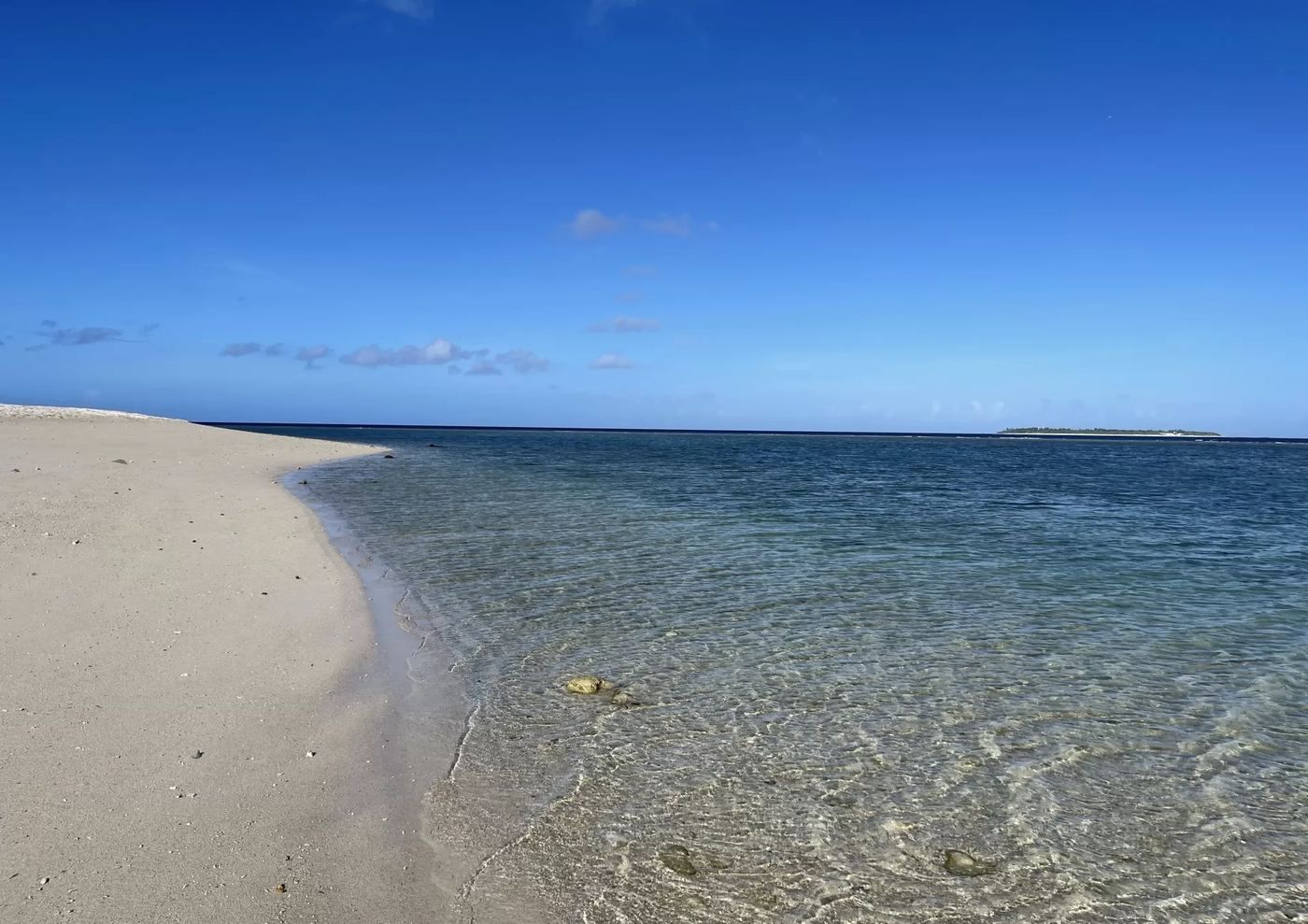
So the winter discount is not about being cold. Look at the sunshine column instead. January and February average three hours of sun a day. July averages 7.3. Winter here is mild and grey, and the sea does not turn the colour it does in the photographs, because that colour is a function of light rather than water temperature.
The other surprise in the table is June sitting level with October, both at 5.3 hours a day. June has the highest rainfall of the year at 284mm, and still gets as much sun as October does. The rainy season here is not a month of drizzle. It rains hard, it stops, and the sun comes back out.
| Month | Sun, hrs/day | Rain, mm | Max temp | Typhoons |
|---|---|---|---|---|
| January | 3.0 | 101.6 | 19.8°C | none in 30 years |
| February | 3.3 | 114.5 | 20.2°C | none in 30 years |
| March | 3.7 | 142.8 | 21.9°C | none in 30 years |
| April | 4.0 | 161.0 | 24.3°C | 0.0 |
| May | 4.5 | 245.3 | 27.0°C | 0.4 |
| June | 5.3 | 284.4 | 29.8°C | 0.6 |
| July | 7.3 | 188.1 | 31.9°C | 1.5 |
| August | 6.7 | 240.0 | 31.8°C | 2.2 |
| September | 6.0 | 275.2 | 30.6°C | 1.9 |
| October | 5.3 | 179.2 | 28.1°C | 1.1 |
| November | 4.1 | 119.1 | 25.0°C | 0.3 |
| December | 3.5 | 110.0 | 21.5°C | 0.0 |
These get bundled together as bad weather, and they should not be. Rain makes you wet. A typhoon deletes the day. Flights stop, attractions close, the rental depots shut, and there is nothing to move your plan to.
The thirty-year normals give Okinawa 2.2 typhoon approaches in August, 1.9 in September, 1.5 in July and 1.1 in October. From January to March there were none at all in the whole statistical period.
If you are coming in summer, the thing to plan is not an umbrella. It is a spare day. A schedule that flies home the evening after the last activity has nothing left to give when a storm takes a day out of it.
| Year | Rainy season began | Rainy season ended |
|---|---|---|
| 2016 | 16 May | 16 June |
| 2017 | 13 May | 22 June |
| 2018 | 1 June | 23 June |
| 2019 | 16 May | 10 July |
| 2020 | 16 May | 12 June |
| 2021 | 5 May | 3 July |
| 2022 | 4 May | 20 June |
| 2023 | 18 May | 25 June |
| 2024 | 21 May | 20 June |
| 2025 | 5 May | 7 June |
A popular piece of advice says to take the last week of June: the rain has finished and the prices have not risen yet. We checked it. The end date has landed anywhere between 7 June and 10 July. It cleared by 20 June in five years out of ten.
That is not a bad bet, and it is a bet. Take it with a plan that still works if it rains, and the years it comes off are very good indeed. The start date wanders too, between 4 May and 1 June, and the rainy season has begun during Golden Week three times in the last ten years.
The most daylight of any month at 7.3 hours a day, and less rain than May or June. Typhoon risk of 1.5 approaches is real but lower than August or September.
You accept: heat, full hotels and the highest prices.
The emptiest month of the year, with as much daily sunshine as October. The rain is heavy but it comes and goes.
You accept: the rainy season, so decide the indoor half of each day in advance.
Typhoon risk down to 0.3, rainfall less than half of September's, 25°C in the afternoon. Crowds sit at average. The month we recommend to friends.
You accept: the sea is cool for swimming, and dusk comes early.
Still 28°C and still swimmable on a good day, with typhoon risk down to 1.1.
You accept: it is the third busiest month, and there is a Japanese holiday weekend in the middle of it.
They set the dates and they are the hardest thing to change. Everything else follows.
Not the hotel. In Golden Week, July to September and the New Year period, rental cars run out entirely. A hotel can be downgraded. A missing car cannot be worked around, because Okinawa's bus network does not reach most of what you came for. What to check when you book one.
The most flexible of the three, and the easiest to fix late.
Leave the first and last hours of the trip empty. Naha Airport has no rental counter inside the terminal, so you cross the road, take a shuttle to a depot and do the paperwork there. In the busy months that is over an hour between landing and driving.
One shape of day works in any month: an outdoor sight first thing, lunch at a roadside station, something indoors in the afternoon, back to the coast for the evening. If the weather turns, the indoor half is already in the plan and nothing needs rearranging.
Flight and hotel prices follow demand, and domestic arrivals are lowest in June, May and January, which sat within a couple of thousand of each other in the most recent year. Because May contains Golden Week and still lands at the bottom, the genuinely empty stretch is from the middle of May through June.
No, it is the second busiest month of the year, above July, and it held that position in all three years we checked. Japanese schools and universities break up in March and graduation trips arrive. Meanwhile the afternoon high is 21.9°C with 3.7 hours of sun a day, so it is crowded and still too early for the sea.
No. June has the highest rainfall of the year at 284.4mm, but it also averages 5.3 hours of sunshine a day, exactly the same as October and well over the 3.0 hours of January. Rain here arrives hard and passes. Step inside while it falls and carry on afterwards.
It is a coin toss. Over the last ten years the rainy season has ended anywhere between 7 June and 10 July, and it had cleared by 20 June in five of those years. Take the gamble by all means, but book a trip that still works if it rains.
Typhoons, and it is not close. Rain can be worked around indoors. A typhoon grounds flights, closes attractions and shuts the rental depots, so the day is simply gone. Approaches average 2.2 in August, 1.9 in September, 1.5 in July and 1.1 in October. Between January and March there were none in thirty years of records.
Not by temperature. Naha averages a daily maximum of 19.8°C in January and 20.2°C in February, which is warmer than Tokyo in April. The problem is light: those two months get 3.0 to 3.3 hours of sun a day, under half of July. Plan for grey skies rather than for cold.
For Golden Week, July to September, and the New Year period, book as soon as the flights are settled, and book the rental car before the hotel because cars sell out completely. For June, January, February or November you can leave it late and pay less.