OL Okinawa Lovers
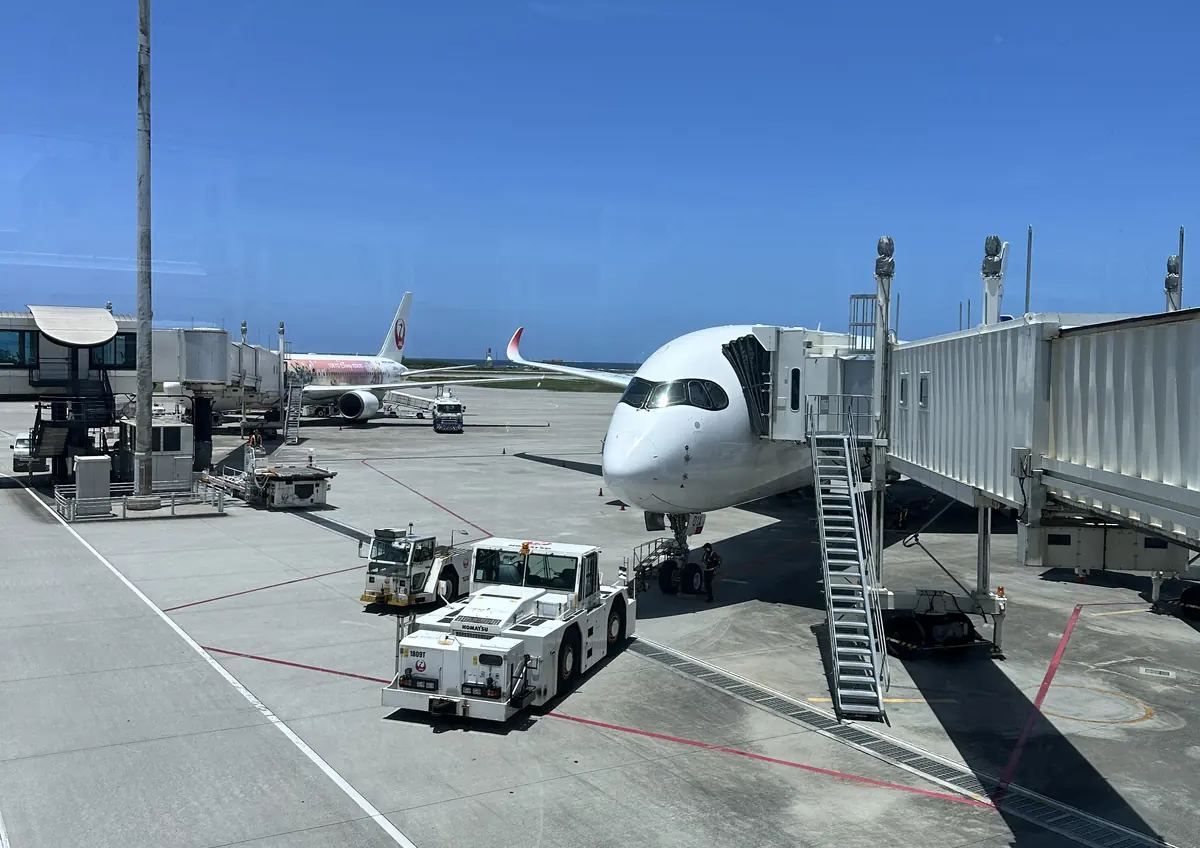
Airliners parked on the apron at Naha Airport
Flights

Cheap seats are
leftover seats

Okinawa gets cheaper when aircraft have space, not when the island is quiet. Japan's transport ministry publishes how full every domestic route runs, and only one quarter of the year has any real slack in it.

April to June is the slack quarter Winter is quiet and still full Two in five cancellations are not weather Checked August 2026
There are no fares on this pageThey move by route, season and booking date faster than we can maintain them. What we can show is the occupancy that sets them
Start with the seats

Most cheap flight guides end at "use a comparison site" and "book early". Everybody knows that already. This page looks at the thing underneath the price instead: how full the aircraft actually are.

The figures come from Japan's Ministry of Land, Infrastructure, Transport and Tourism, which publishes passenger numbers, seat counts and occupancy for every domestic route, quarter by quarter, along with punctuality and cancellations by airline.

Three things need saying before the tables, because these are Japanese domestic routes and you are probably not booking one of them.

01

The idea travels even where the data does not

Fares fall when seats go unsold. That holds on any route from any country, and it is not the same thing as "when fewer tourists come". Okinawa's quietest season and Okinawa's cheapest season are two different seasons.

02

These numbers say when Japan moves

Domestic occupancy is a reading of domestic demand, and domestic demand is what empties the hotels and the rental fleet. When Tokyo to Naha flies with a sixth of its seats empty, the island has space in it too.

03

If you connect, this is your flight

Plenty of readers reach Naha on a domestic leg out of Haneda, Narita, Itami or Kansai. On that leg every figure on this page applies to you directly, including the punctuality and the cancellation causes.

Only one quarter has slack in it

Tokyo (Haneda) to Naha, by quarter

Tokyo to Naha is the busiest route on the list and the one most connecting passengers use. Set the four quarters side by side and the shape of the year is blunt.

QuarterSeat occupancyWhat it means
April to June76.4%the only quarter with room
July to September91.4%fullest of the year
October to December88.6%full
January to March88.4%full, despite the quiet island
Full year86.3%7.03 million passengers

April to June is the only quarter that drops, and it drops hard. 76.4% against 91.4% is fifteen empty seats in every hundred. Those are the seats that get sold cheap.

The interesting row is January to March, at 88.4%. Almost the same as summer, on a route serving an island that is visibly emptier in winter.

!
Why the quiet season is not the cheap season. Tokyo to Naha offered 1.98 million seats between January and March and 1.99 million between April and June, so supply barely moved. Demand did: 1.75 million passengers in the winter quarter against 1.52 million in the spring one. Fewer holidaymakers come to Okinawa in winter, and the airlines answer by cutting flights. What is left on sale gets sold, and the fare never falls. "The island is empty" and "the flights are cheap" are separate statements.

Now read the same column as a visitor arriving from outside Japan. This is a crowd forecast before it is a fare forecast. April to June is the stretch when Japan is not moving. That is when the hotel has rooms, the rental desk has cars and the car park at the aquarium has space. From October to March the island can look quiet and still be sold out, because the people filling it booked months ago.

Whether your own flight to Okinawa is cheap in those months depends on your route and your own country's holiday calendar, and no published figure covers that. What the Japanese data does tell you is what is waiting on the ground when you land.

Where you connect changes what is left

all 20 routes into Naha, seat occupancy in %

Occupancy varies a lot by route. If your ticket includes a domestic leg, find your airport here. If you are flying direct from your own country, read the first column as a calendar of Japanese demand instead: the airports that empty out in spring are the ones sending fewest people to the island.

Route into NahaApr to JunJul to SepOct to DecJan to MarYear
Tokyo (Haneda)76.491.488.688.486.3
Fukuoka72.582.383.482.080.1
Chubu (Nagoya)75.084.583.185.582.2
Osaka (Itami)84.491.890.090.889.3
Kansai (Osaka)81.387.885.887.285.4
Tokyo (Narita)90.393.989.690.791.2
Kobe74.882.979.980.479.6
Kagoshima69.478.782.578.777.3
Sendai81.291.289.793.789.0
Hiroshima83.388.883.689.486.1
Sapporo88.892.088.788.789.5
Takamatsu82.086.784.289.285.2
Okayama87.089.487.189.288.1
Kumamoto77.888.686.488.485.3
Ibaraki66.982.582.181.778.3
Iwakuni73.885.680.484.981.1
Matsuyama73.186.082.984.381.5
Miyazaki66.177.179.979.475.6
Komatsu74.376.384.279.678.6
Shizuoka58.579.580.777.474.1

Routes are listed by passenger volume, busiest first. The four highlighted rows are the ones that fell below 70% from April to June, which is where the most seats go spare. Every figure is a route average, so it hides the difference between a Tuesday and a Saturday.

Three things worth pulling out.

One. The two Tokyo airports are not the same. Haneda runs at 86.3% for the year and Narita at 91.2%. Narita is the fuller of the two, which is what happens when the cheaper option attracts the crowd. Assume Narita sells out first.

Two. Of the five busiest routes, Fukuoka has the most room at 80.1% for the year and 72.5% from April to June. If your itinerary can flex about where it enters Japan, the Kyushu connection is the easiest of the big ones to get a seat on.

Three. The thin routes have the most slack and the least resilience. Shizuoka 74.1%, Miyazaki 75.6%, Kagoshima 77.3%, Ibaraki 78.3%. Fewer flights means more empty seats, but it can also mean one departure a day, and one departure a day has nothing to move you onto when it is cancelled.

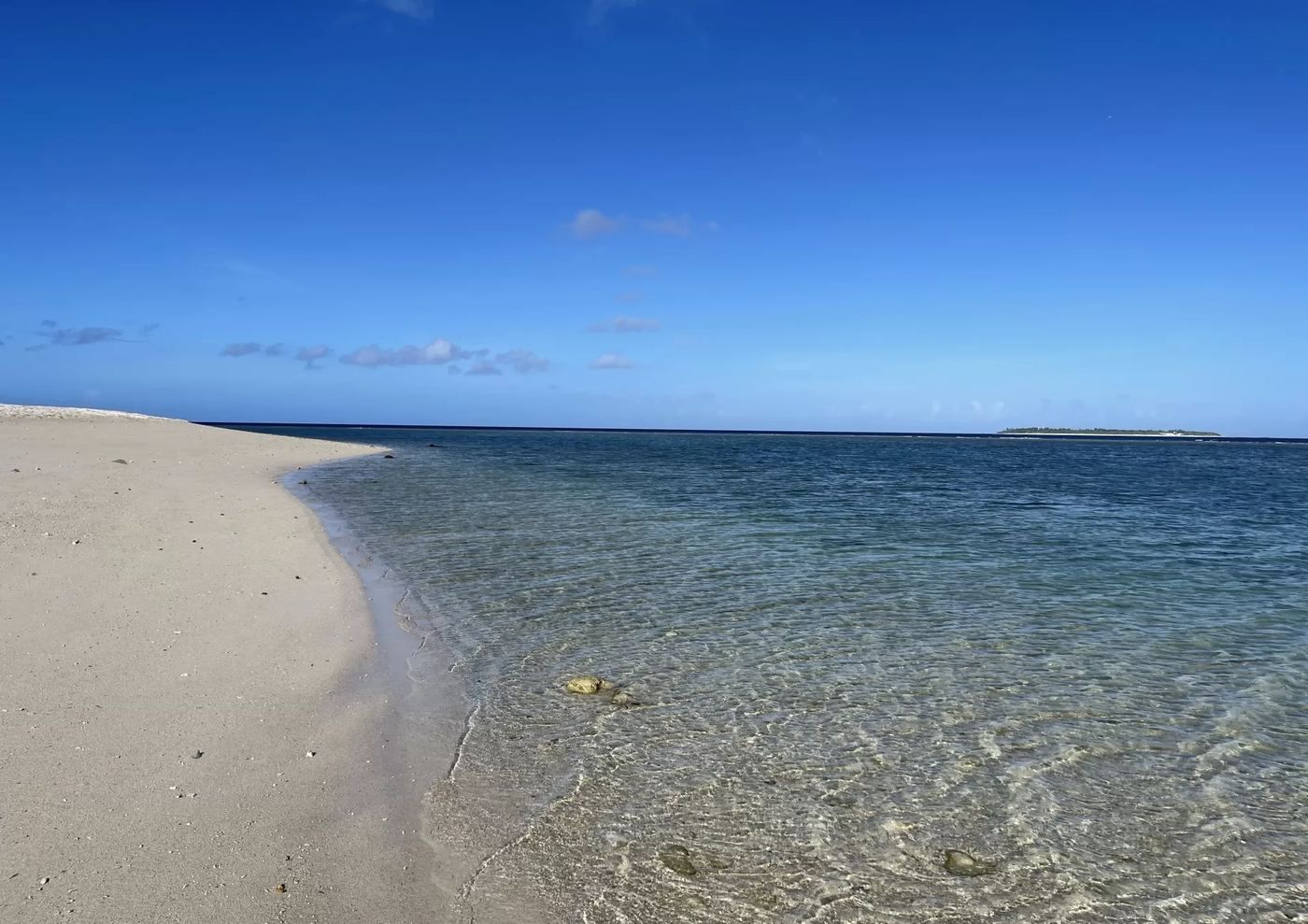
An empty stretch of white sand under an Okinawan sky
Come in the months the seats go spare and the beaches are usually spare as well.

Low cost does not mean late

departures within 15 minutes of schedule, all routes

"You get what you pay for" is checkable here, because the ministry publishes punctuality by airline. The result does not go the way the saying does.

AirlineOn timeType
StarFlyer89.0%full service
Solaseed Air85.8%full service
Peach85.1%low cost
Skymark84.8%full service
Japan Transocean Air83.4%full service, Okinawa based
Spring Japan82.1%low cost
Jetstar Japan79.5%low cost
Japan Airlines79.2%full service
All Nippon Airways78.4%full service
AIRDO78.4%full service
All ten carriers80.4%combined

Peach came in at 85.1%, ahead of Japan Airlines on 79.2% and All Nippon Airways on 78.4%. Jetstar Japan sat at 79.5%, level with the majors. For this year at least, "the budget airline will make you late" does not hold.

Read the caveat before you use it, though. These are whole network figures, not Okinawa figures, and they include carriers that do not serve Okinawa at all. They tell you how an airline runs, not how your route runs.

One more line worth having. Japan Transocean Air, the Okinawa based carrier, finished the year on 83.4% and held 83.3% through August, in a month when the ten carrier average fell apart.

!
August is late everywhere. The ten carrier figure is 80.4% for the year and 73.8% in August alone, so more than one departure in four leaves at least fifteen minutes behind. All Nippon Airways dropped to 69.7% and Japan Airlines to 72.9%. If you are flying in summer, do not stack the arrival day. Assume the car hire desk and the hotel check in both happen later than planned, and the trip starts calmer.

If you are flying direct from your own country, take the month rather than the airline. August is when the Japanese network runs behind, so any connection, transfer or tight onward plan inside Japan in August wants padding around it.

Two in five cancellations have nothing to do with weather

9,293 cancelled flights, ten carriers

The frightening part of an Okinawa trip is not the fare, it is the cancellation. The causes are published too, and the split is not what most people assume.

CauseFlightsShare
Weather4,30146%
Aircraft rotation3,74340%
Aircraft fault6577%
Other5926%

Weather accounts for 46%. More than half of the rest is something else, and the biggest single piece of it is aircraft rotation, at 40%.

Aircraft rotation means the delay or cancellation of an earlier flight arriving on the next flight the same aeroplane was due to operate. An aircraft flies several sectors a day. Break one in the morning and it drags into the evening.

That gives one genuinely useful rule. An earlier departure has had less time to go wrong. The first flight of the day on your arrival day is worth paying a little more for, because nothing has happened yet to the aircraft you are getting on.

The reverse is the flight home. The last departure of the day is carrying everything that went wrong before it. If you are working the next morning, or connecting onward to another country, do not make it your only way out. What to do when the weather stops everything is in the typhoon guide.

This is the part of the page that transfers to an international ticket without any translation at all. Rotation delays are not a Japanese phenomenon, and the cost of missing a connection is a great deal higher when the connection is your flight home.

For scale, the ministry put the ten carrier cancellation rate at 1.19% from July to September and 0.64% from April to June. Small either way, and roughly double in the typhoon quarter.

Three lines to check before you pay

the same three, whatever the fare

Conditions differ by airline, and by fare type within the same airline, so there is no point listing them here. What is worth handing over is where to look on the booking screen. On an international ticket these matter more than they do domestically, not less.

01

Is checked baggage in this fare?

Budget airlines charge for the hold separately. With Peach, cabin baggage is a personal item plus one bag, two pieces and 7.0kg in total, and anything over that goes in the hold and is paid for. The charge varies by fare type, route and how you book. Multiply by four people and a return, and the gap stops being small.

02

If it is cancelled, where can you be moved to?

Look for the rebooking scope, not the refund policy. Later flights on the same airline only, or the next day as well, or another carrier? Okinawa routes do stop for typhoons. This clause is what decides how long you are stuck once they do.

03

Is the return the last flight of the day?

The cheapest fares are usually the first departure or the last one. The last one inherits the whole day's delays, and there is nothing behind it. If anything at all depends on you getting home, book one earlier.

!
Connecting readers: one ticket or two changes everything. If your international flight and your domestic leg to Naha are sold as a single through ticket, the baggage allowance and the check in are normally handled end to end, and a delay on the first leg is the airline's problem. Buy them as two separate tickets and neither is true: you may have to collect your bags, clear through and check in again, the domestic carrier's own allowance applies to the second leg, and if you miss it because the first one was late, that is your problem to solve and pay for. Both approaches are legitimate. Just know which one you have bought before you compare the totals, and confirm the baggage rule on the booking screen rather than assuming it.

Once the flights are settled, the booking order is the same one we give in the car hire guide. Flights first, then the car, then the hotel. In the busy months it is the cars that genuinely run out, and a hotel can be downgraded in a way a missing car cannot.

If the dates are still open, lay this page's slack quarter over the arrival figures in when to visit and one window falls out of the overlap: mid May through June. Fewest visitors on the island, most spare seats in the aircraft.

The rainy season is the price of that window, and it is a real price. It is also the time of year when you can stand at the good viewpoints on your own.

Questions

When are flights to Okinawa cheapest?+

Whenever seats go unsold. On the Tokyo (Haneda) to Naha route, seat occupancy is 76.4% from April to June against 91.4% from July to September, 88.6% from October to December and 88.4% from January to March. That April to June dip is Japanese domestic data, so it sets the fare only if part of your journey is a Japanese domestic flight. For everyone else it is still the month to aim at, because it is when Japanese demand for the island is lowest and hotels and rental cars are easiest to get.

Okinawa is quiet in winter, so why are flights not cheap then?+

Because the airlines cut flights to match. Tokyo to Naha offered 1.98 million seats from January to March and 1.99 million from April to June, so supply barely changed, but passenger numbers were 1.75 million in the winter quarter against 1.52 million in the spring one. Occupancy therefore reached 88.4% in winter. Fewer visitors on the island does not mean emptier aircraft.

Does the Japanese domestic data matter if I am flying direct from my own country?+

Yes, but read it as a crowd and availability forecast rather than a fare forecast. Domestic Japanese travellers are what fills the hotels, the rental fleet and the attractions, so the quarter when domestic flights run 15 points emptier is also the quarter when the island itself has room. If your journey includes a connection through Tokyo or Osaka, the figures apply to that leg directly.

Are low cost carriers less punctual?+

Not in this year's figures. Peach recorded 85.13% of departures within fifteen minutes of schedule, ahead of Japan Airlines on 79.24% and All Nippon Airways on 78.43%. Jetstar Japan was 79.54%, level with the majors. These are whole network figures for each airline rather than Okinawa route figures, and they include carriers that do not fly to Okinawa.

How often are flights to Okinawa cancelled?+

Across the ten carriers the ministry reported a cancellation rate of 1.19% from July to September and 0.64% from April to June. Of 9,293 cancelled flights, weather accounted for 4,301 or 46% and aircraft rotation for 3,743 or 40%. Rotation means an earlier delay passing down the day to the same aircraft's later flights, so an early departure is exposed to less of it.

Which departure airport has the most spare seats?+

Over the full year, Shizuoka at 74.1%, Miyazaki at 75.6%, Kagoshima at 77.3%, Ibaraki at 78.3% and Komatsu at 78.6%. Among the five busiest routes Fukuoka is the emptiest at 80.1%. Across all twenty routes Narita is the fullest at 91.2%, and the two Tokyo airports differ: Haneda 86.3% against Narita 91.2%.

What should I check before booking?+

Three things. Whether checked baggage is included in the fare, which flights you can be moved to if yours is cancelled, and whether the return is the last departure of the day. With Peach, cabin baggage is a personal item plus one bag, two pieces and 7.0kg combined, and anything above that is checked and charged. The saving on a cheap fare is modest. The cost of not getting home is the whole trip.

Does my baggage allowance carry through to the domestic leg?+

It depends on how you bought the ticket, and it is worth confirming on the booking screen. A single through ticket covering the international and domestic sectors is normally handled end to end. Two separately bought tickets are two separate contracts, so the domestic carrier's own allowance applies to its own sector, and a delay on the first flight is not the second airline's responsibility.
Sources

checked 4 August 2026