A World Heritage site with no ticket office, no closing day, and walls you are allowed to climb. Nakijin charges ¥1,000 for the same listing. Shuri joins it in November.
Nine sites in Okinawa carry the same World Heritage inscription. Two of them charge ¥1,000. This one has no ticket office at all, and it is the only one where you are invited to climb onto the wall.
Zakimi sits on a low rise in the middle of Yomitan, twenty minutes off the expressway and two kilometres from the main coast road. It is not on the way to anything, which is why most itineraries miss it, and why it is usually quiet when you get there.
| Site | Adult | Notes |
|---|---|---|
| Zakimi Castle | Free | No ticket office, no closing day, free car park. World Heritage since 2000. |
| Yuntanza Museum | ¥500 | Beside the castle, and a separate building. Elementary and junior high ¥300, over-65s ¥400. Yomitan residents pay ¥200 / free / ¥160. Open 9:00–18:00, last entry 17:30, closed Wednesdays and 28 Dec–4 Jan. |
| Nakijin Castle | ¥1,000 | Same inscription. Raised from ¥600 on 1 September 2025. |
| Shuri Castle | ¥400 | Same inscription. Rises to ¥1,000 on 23 November 2026. |
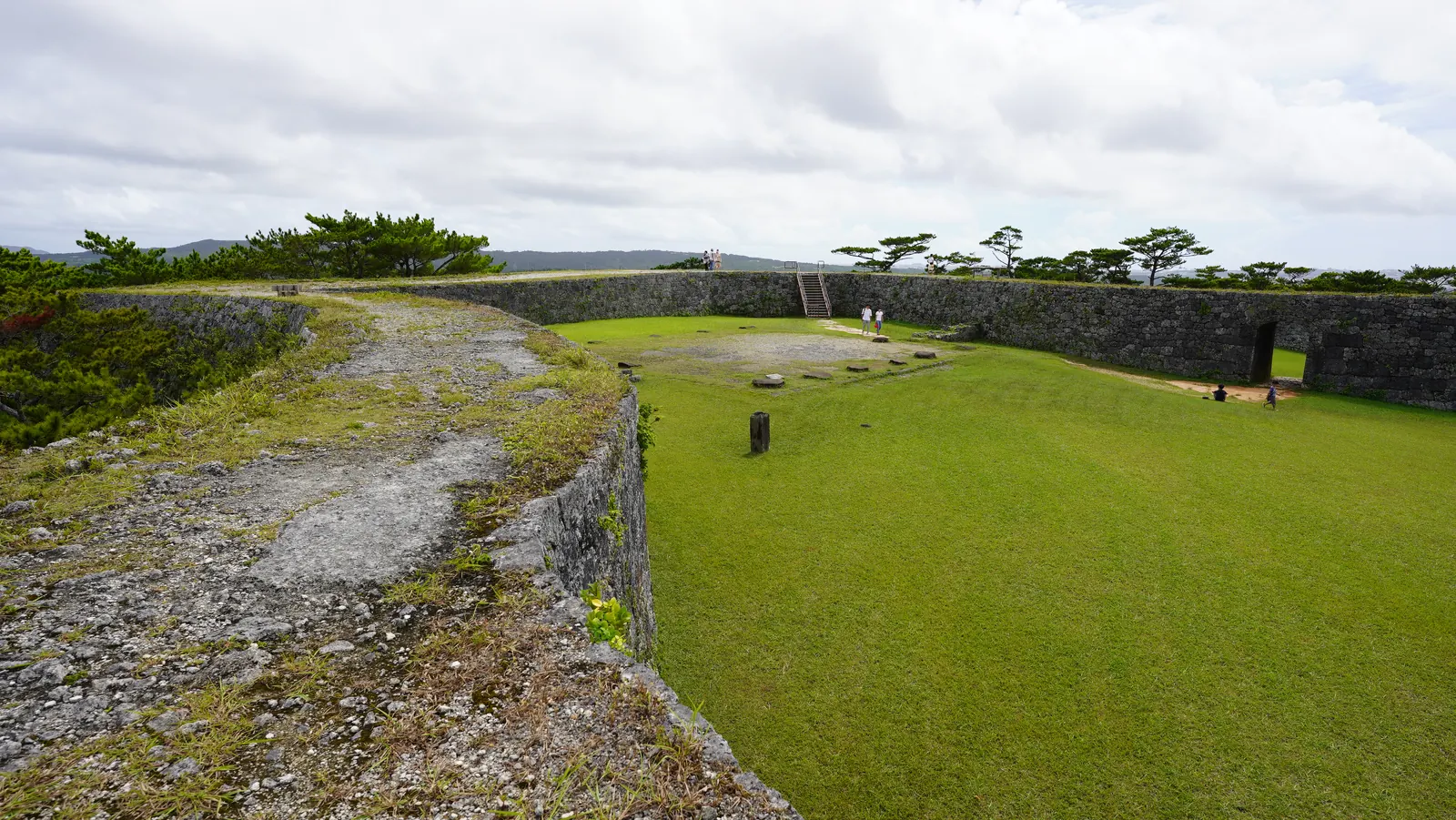
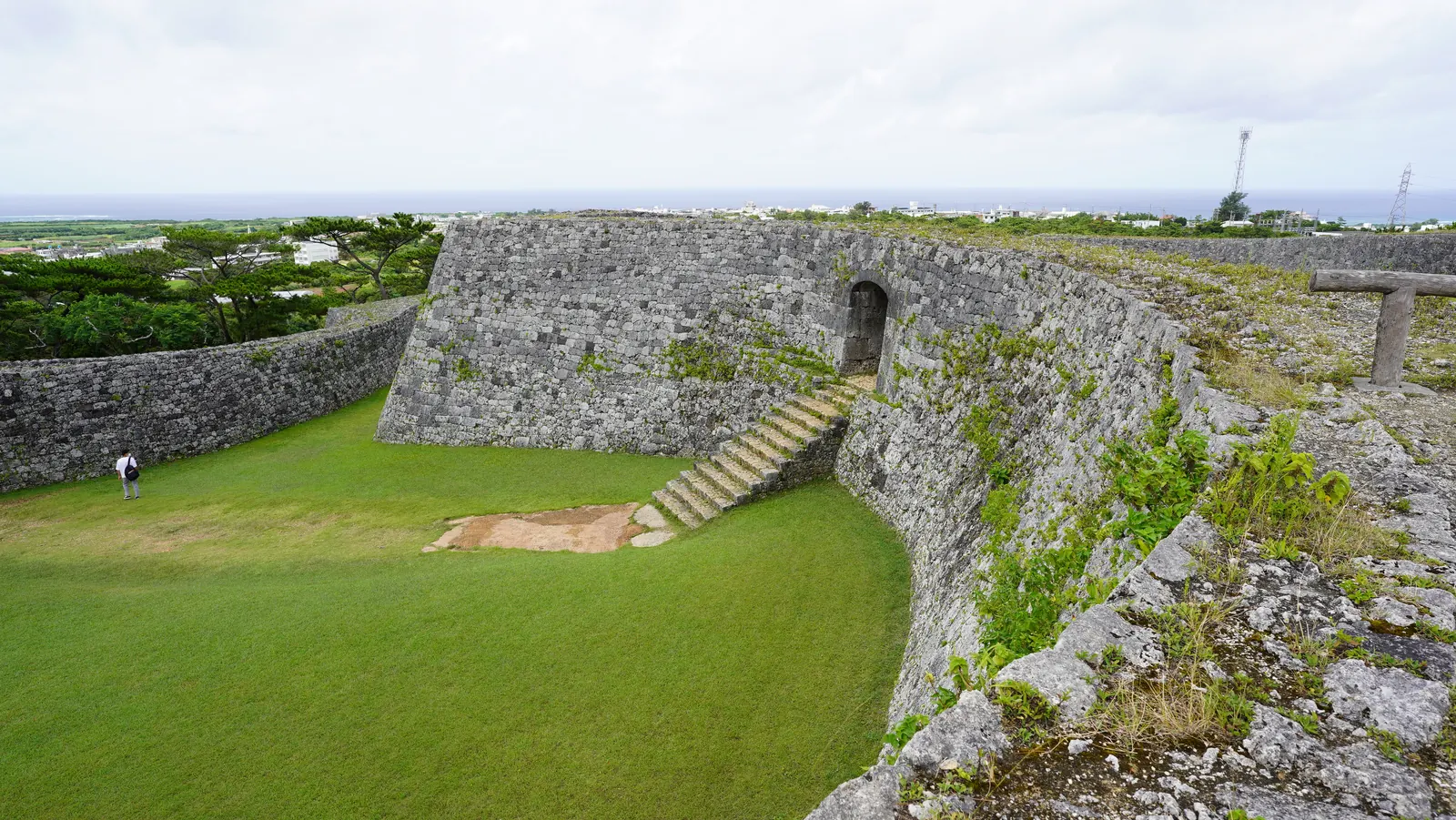
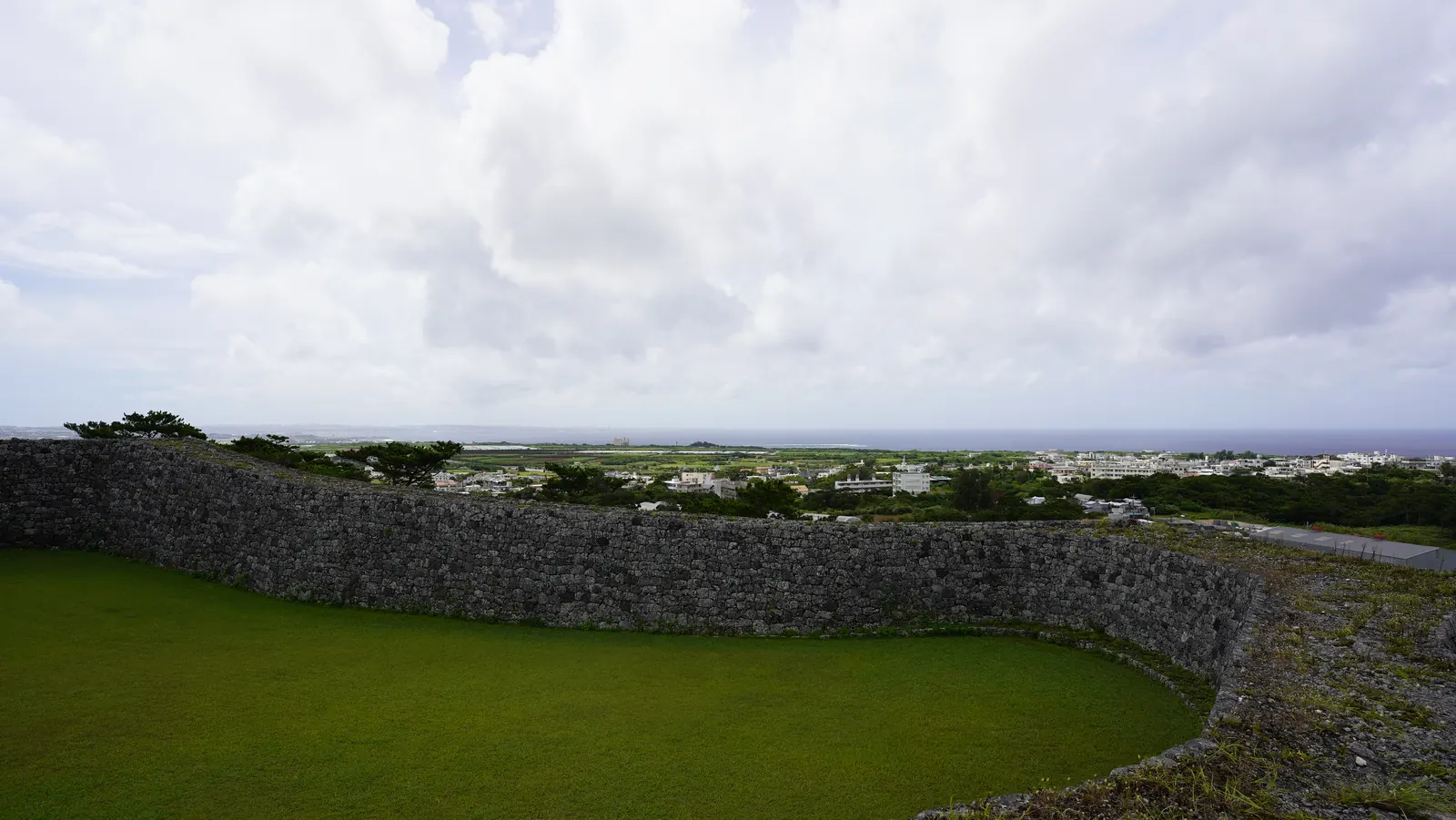
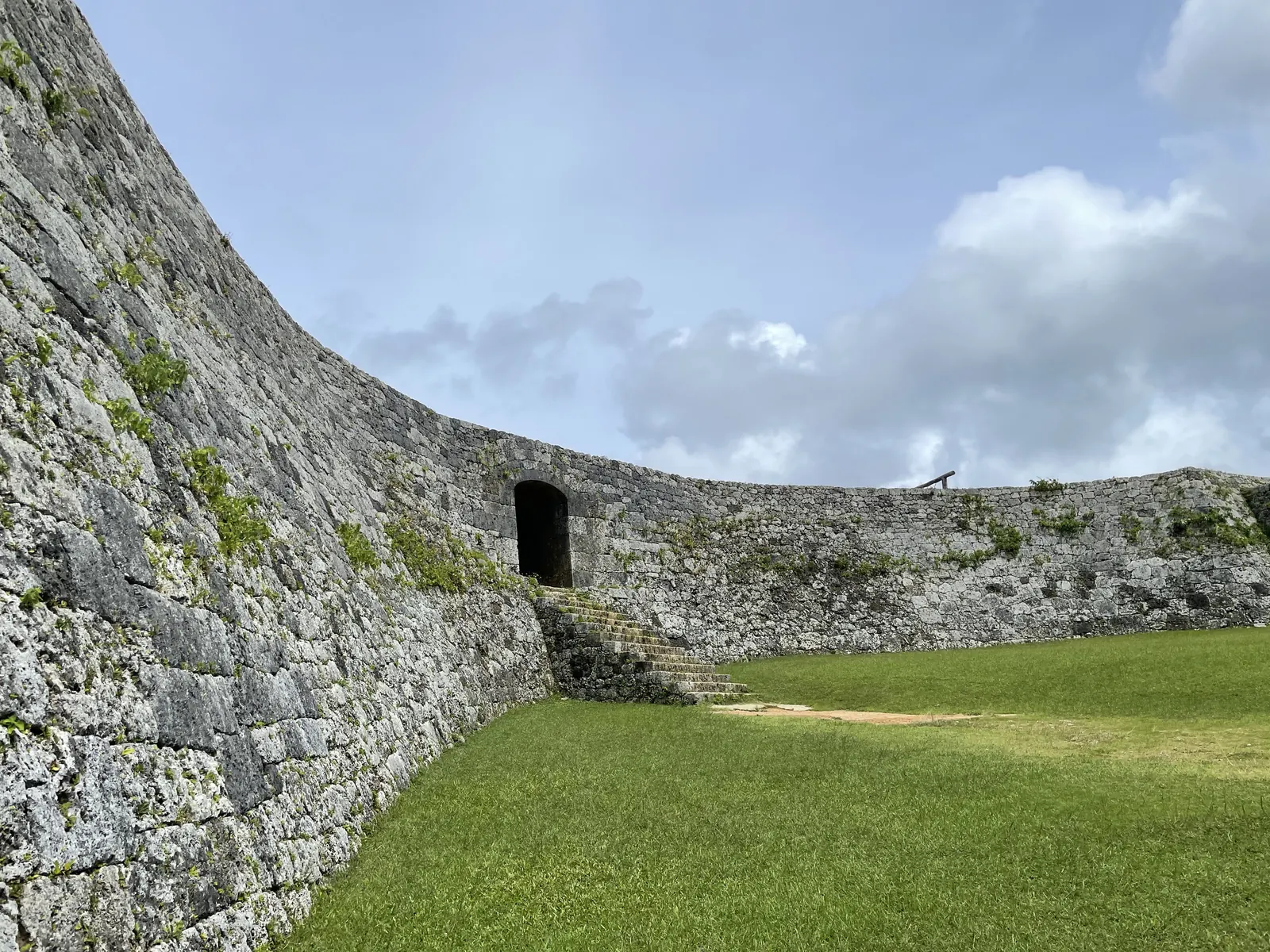
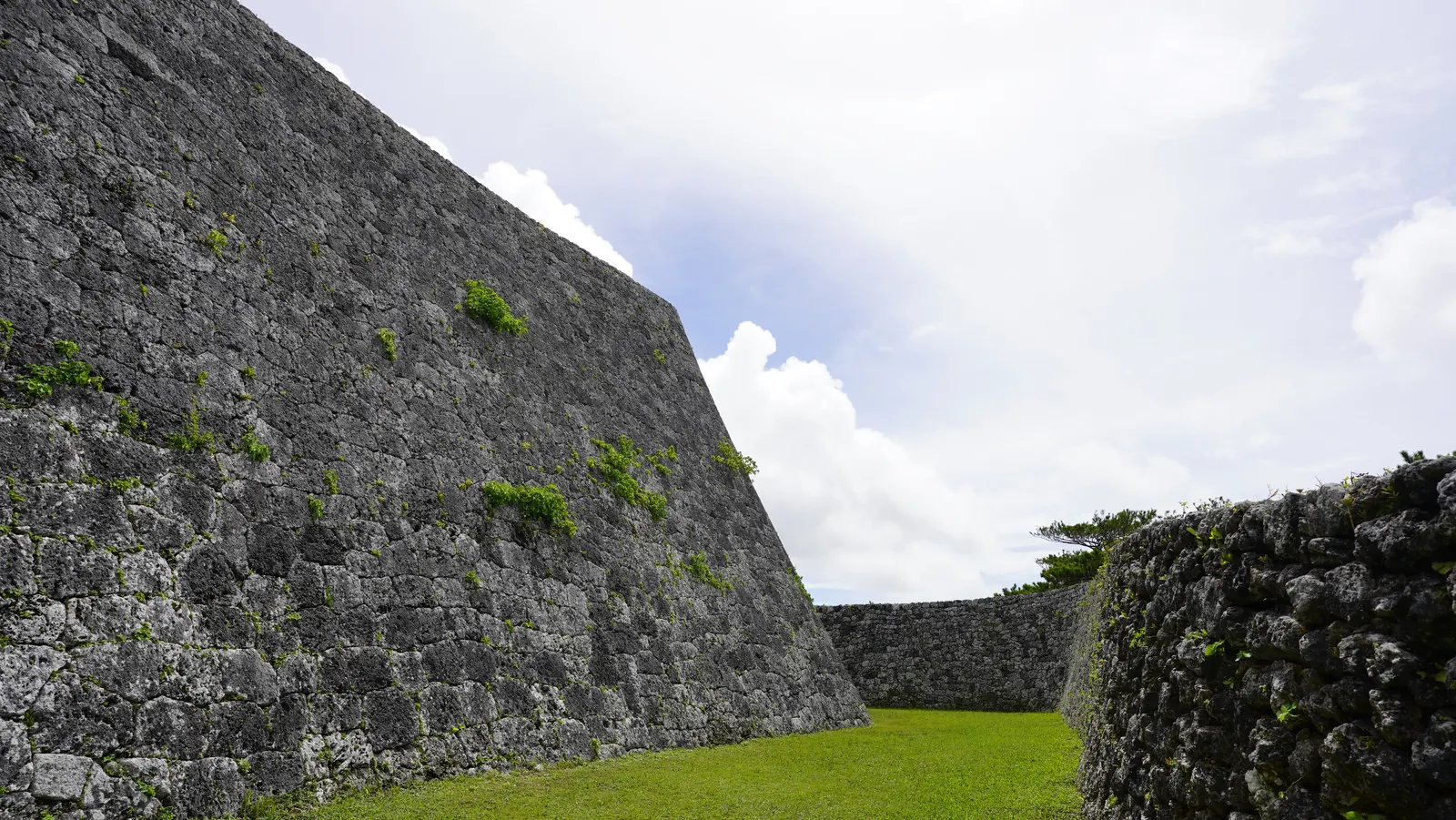
Zakimi is small: two enclosures, an outer and an inner. The whole circuit takes about forty minutes at an unhurried pace. What makes it different from every other gusuku on this island is that the wall tops are open to walk on. Stone steps rise from inside the inner enclosure and put you on top of the rampart, four or five metres above the lawn.
There are no handrails. There is no barrier on the outer edge. The stone is uneven and slopes in places. That is the trade for being trusted with a 600-year-old wall, and it is worth saying plainly: this is fine for most adults and not a place to let small children run ahead of you.
The wall line curves rather than runs straight, following the contour of the rise instead of correcting it, and from above you can read the whole shape of the thing at once. On a clear day you can see the East China Sea on one side and across the island toward the Pacific on the other.
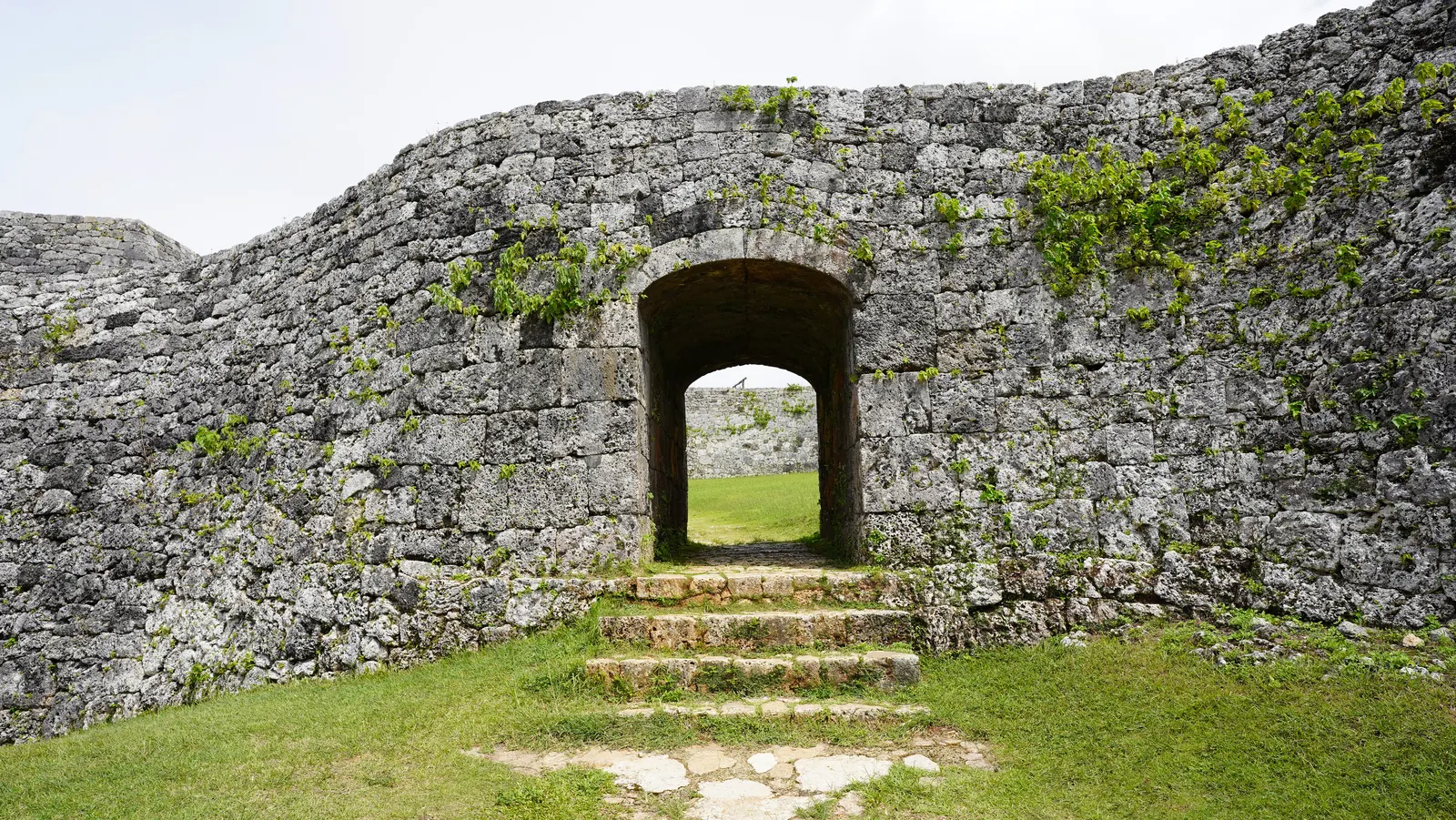
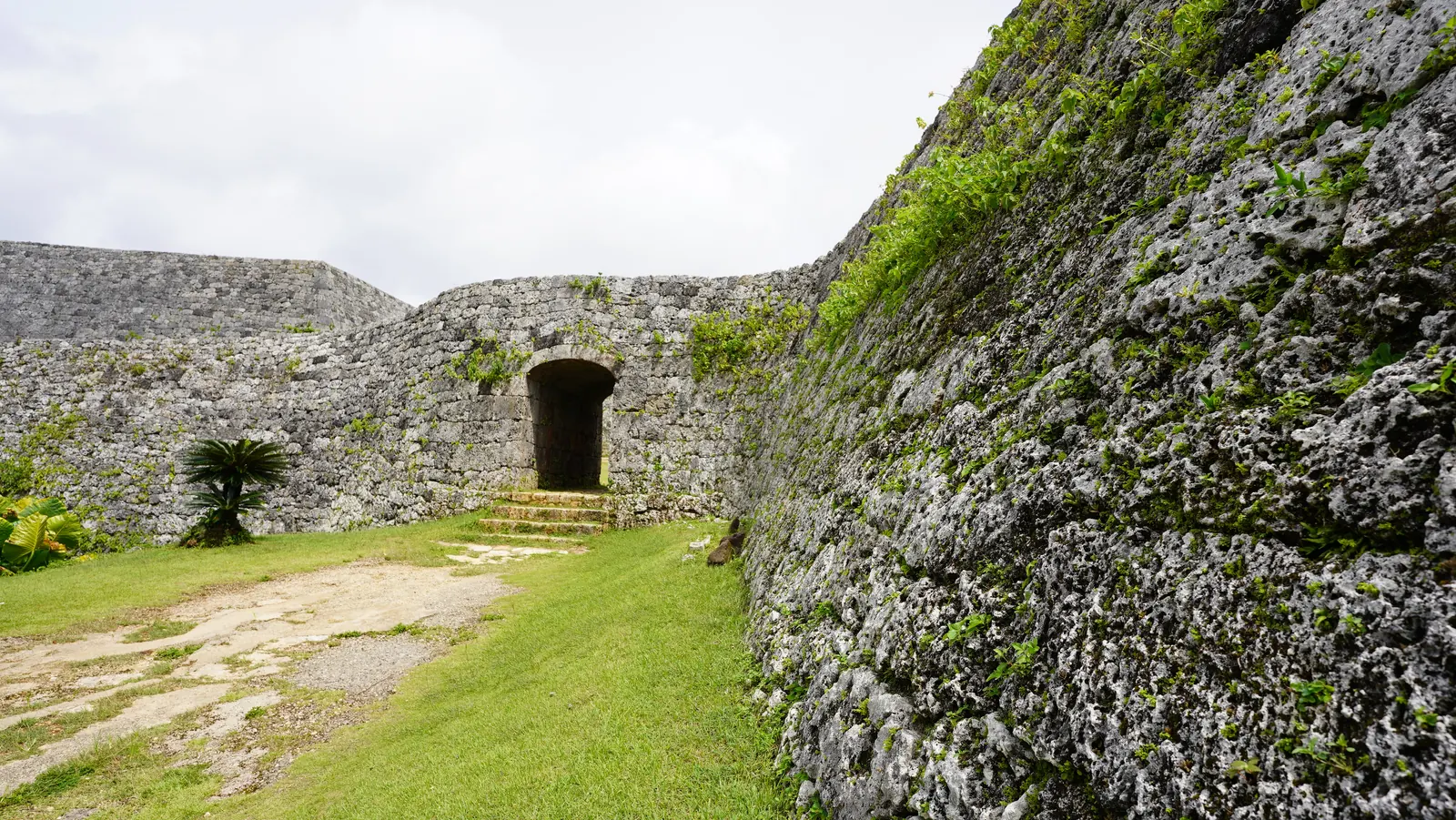
The two arch gates are the oldest surviving stone arches in Okinawa, and both have a keystone wedged at the crown, a detail that is easy to miss from underneath and obvious once you know to look up.


Gosamaru, lord of Yomitan, moves down from Yamada Gusuku about four kilometres to the north-east and raises this one. He is remembered as the finest castle builder of the Ryukyu Kingdom, and Zakimi is the argument for that reputation.
After around twenty years he is moved east to Nakagusuku, to keep watch on the increasingly powerful lord of Katsuren. Zakimi ceases to be a seat of power, which is, in the end, why so much of its 15th-century stonework survived to be argued about later.
The site is shelled during the Battle of Okinawa. Afterwards, much of the wall and the arch gates are taken apart so that a United States military radar station can be built here. For a generation, the castle is a base.
Following Okinawa's return to Japan, the site is excavated and the walls rebuilt from what was recorded and recovered. In 2000 it is inscribed as one of the Gusuku Sites and Related Properties of the Kingdom of Ryukyu.
This is the part worth carrying around the site. Zakimi is not a ruin that quietly survived. It is a ruin that was taken apart within living memory and put back. What you walk on is a restoration of 15th-century work, done from excavation, and it sits on ground that was a foreign military installation for twenty-seven years.
Which makes the comparison with Shuri more interesting than the usual one. At Shuri the World Heritage property is the archaeology under the ground, and the buildings on top are reconstructions. Here the walls are the monument, and they too have been rebuilt. In Okinawa, very little that is old was left alone.
Because there is no gate, the castle has no opening hour in the ordinary sense. People walk up here early, and the cherry trees in late January bring an evening crowd. The museum is the part with a timetable, and the one that catches people out: it closes on Wednesdays, which is also the day some visitors deliberately choose because the coast is quieter.
If you are combining it with anything, Kina Banjo, Japan's smallest roadside station, is fifteen minutes away on the same road, and the pottery quarter is ten minutes north.
Yes. No admission, no ticket office, no closing day, free parking. It carries the same World Heritage inscription as Shuri and Nakijin, both of which charge. The ¥500 that appears on some English listings is the Yuntanza Museum next to it, which is a separate building.
Yes, and it is the reason to come. Steps lead up from the inner enclosure and the wall tops are wide enough to walk along. There are no handrails and no barrier on the outer edge and the stone is uneven. Fine for most adults, not a place for small children to run ahead. Shoes with grip help more than you would expect on a flat site.
About 40 minutes for the castle itself, which is two enclosures, not a large site. Add an hour if you are doing the museum. Late afternoon gives the best light on the walls.
The lord of Yomitan and the Ryukyu Kingdom's most celebrated castle builder. He raised Zakimi between 1416 and 1422, having come from Yamada Gusuku to the north-east, and governed from it for about twenty years before being moved to Nakagusuku in 1440 to check the growing power of the lord of Katsuren. Both Zakimi and Nakagusuku are on the World Heritage list.
Heavily. It was shelled during the Battle of Okinawa, and afterwards much of the wall and the arch gates were dismantled so a US military radar station could be built on the site. Excavation and restoration followed the return of Okinawa to Japan in 1972, and the inscription came in 2000. The walls you walk on are a restoration of 15th-century work.
Late January into February, like the rest of Okinawa, earlier than anywhere else in Japan. Zakimi is lit in the evenings during the season and it is the busiest the site gets all year, which for Zakimi still means quieter than most places.