By car
About 50 minutes north of Naha Airport on Route 58, or 30 minutes from Chatan. Everything here has free parking, including the castle.
There is no expressway exit for Yomitan. Route 58 is the road.
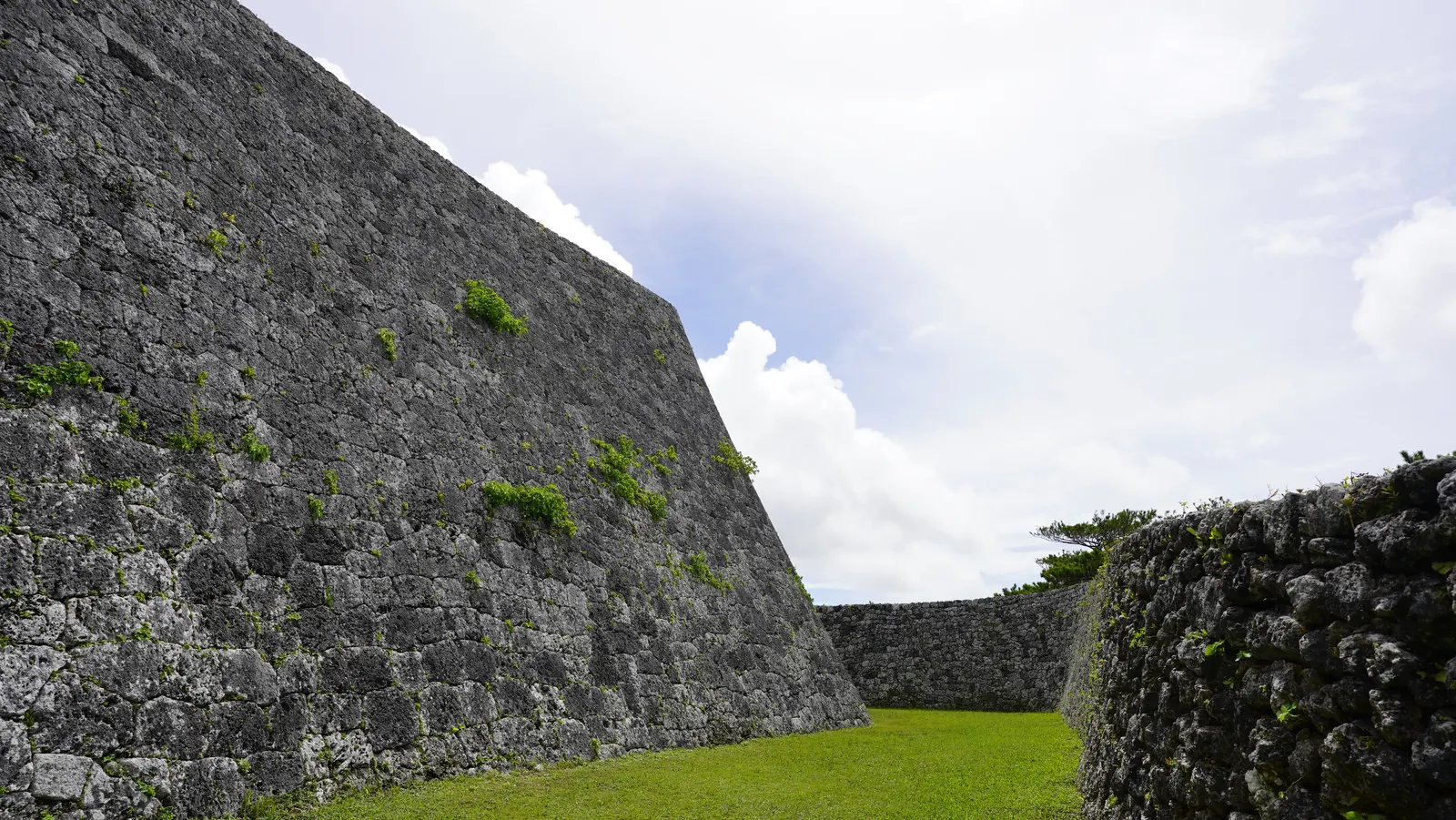
Japan's most populous village, a World Heritage castle that costs nothing to enter, and a pottery quarter that exists because Naha ran out of room for smoke.
This is the village this site is written from, so treat what follows accordingly. We are not going to pretend to be neutral about it, but we can tell you exactly what things cost, and which of them are free.
Yomitan is on the central west coast, half an hour north of the American Village and half an hour south of the resort strip at Onna. Most people drive straight through it on Route 58 without stopping. It is officially a village, and it has around 41,000 residents, the most populous village in Japan. It took that title at midnight on 1 January 2014, when the previous holder in Iwate became a city, and it saw the moment in with a countdown and fireworks at the castle.
What is here is a World Heritage castle with no ticket office, nineteen working pottery studios, a lighthouse you can climb, and the only stretch of this coast that has never been turned into a resort strip.
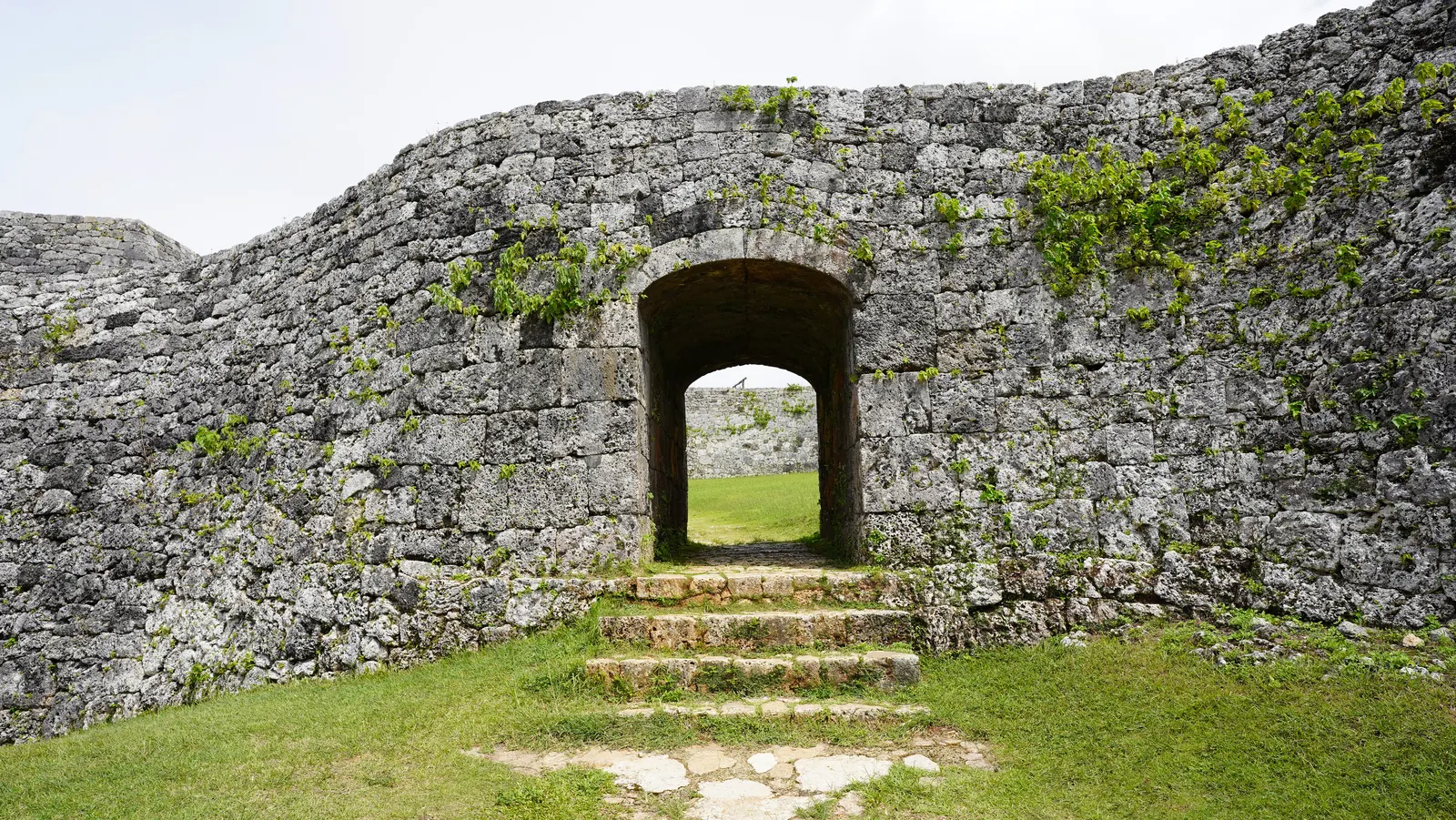
Built in the 1420s, and holding the oldest surviving stone arch gates in Okinawa. Free, open, and you are allowed on top of the walls.

The museum next to the castle. This is the thing that costs money here, and the price guides often misattribute to the castle itself.
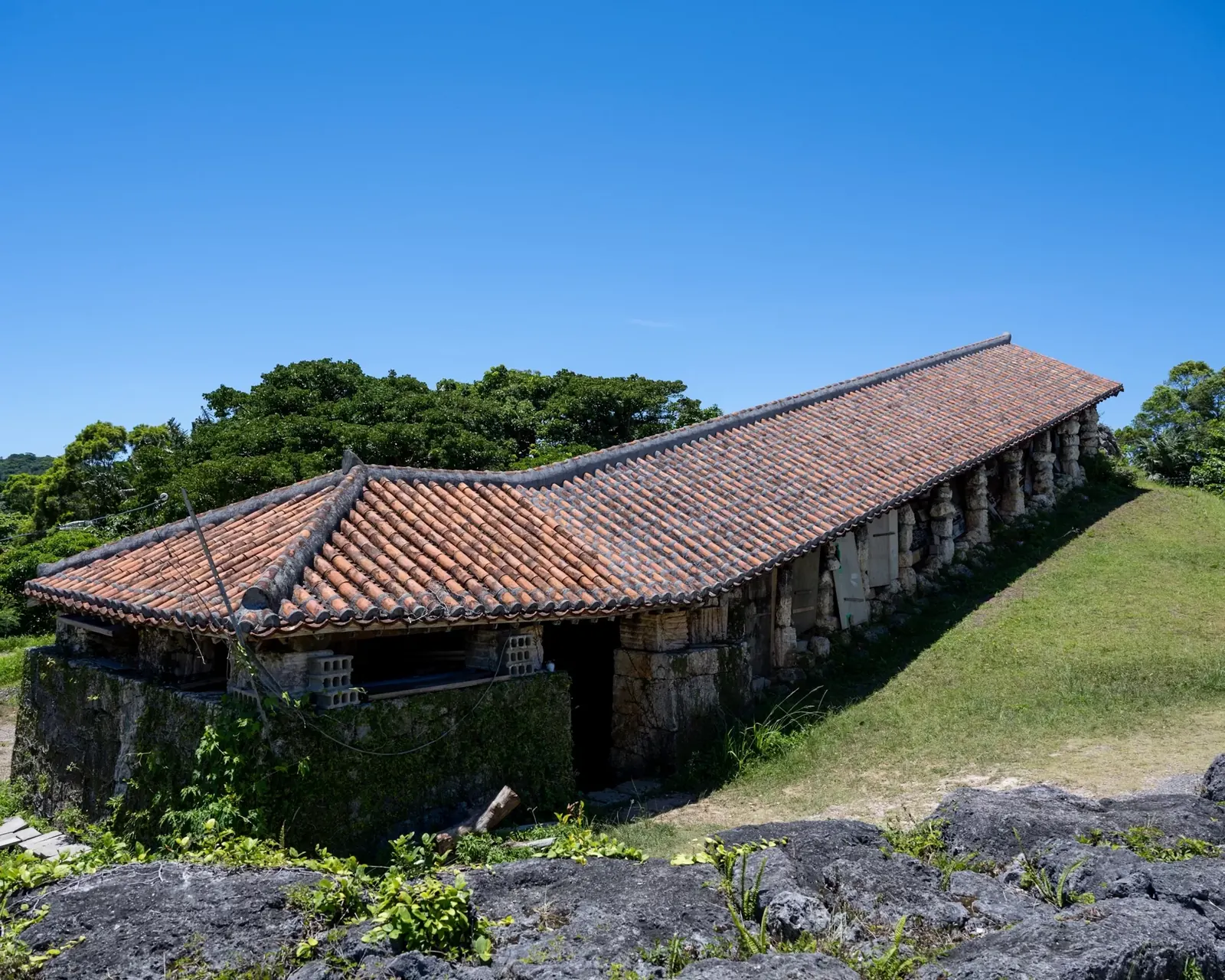
The pottery quarter, built around its shared climbing kilns. Nineteen independent studios, each keeping its own hours; the lanes are open whenever.

A Hoshino Resorts café built onto the rocks at Gima. Its closing time follows the sun: last orders at sunset, doors shut an hour later.
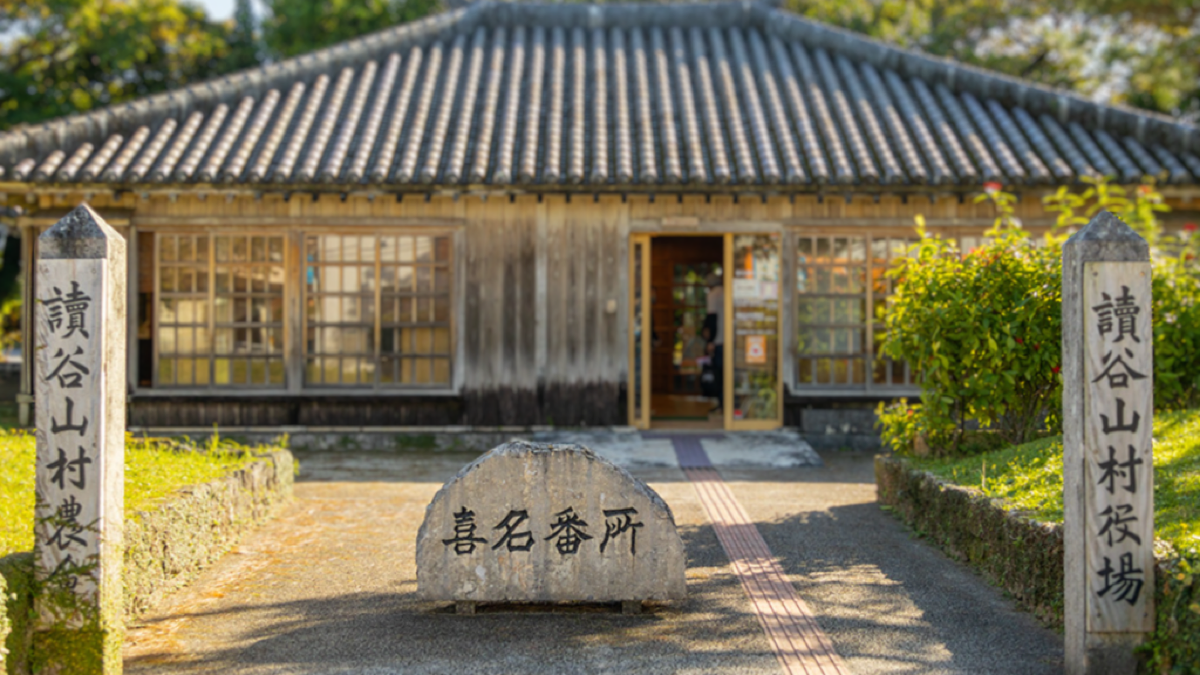
Japan's smallest roadside station, a reconstruction of a Ryukyuan checkpoint. Free, and two minutes off the main road.
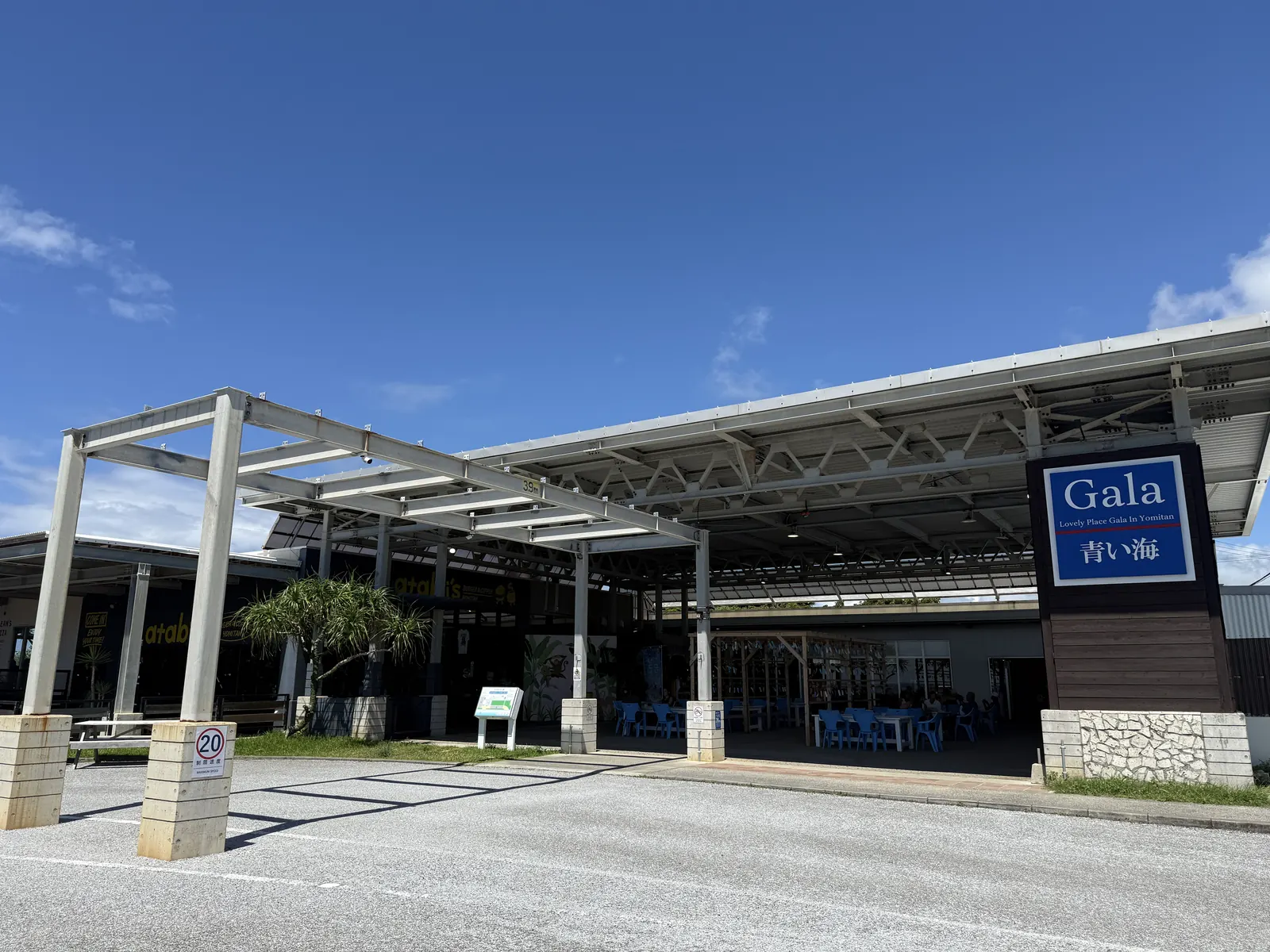
A salt-making and glass workshop complex on the shoreline, aimed squarely at visitors. Useful if the weather turns.
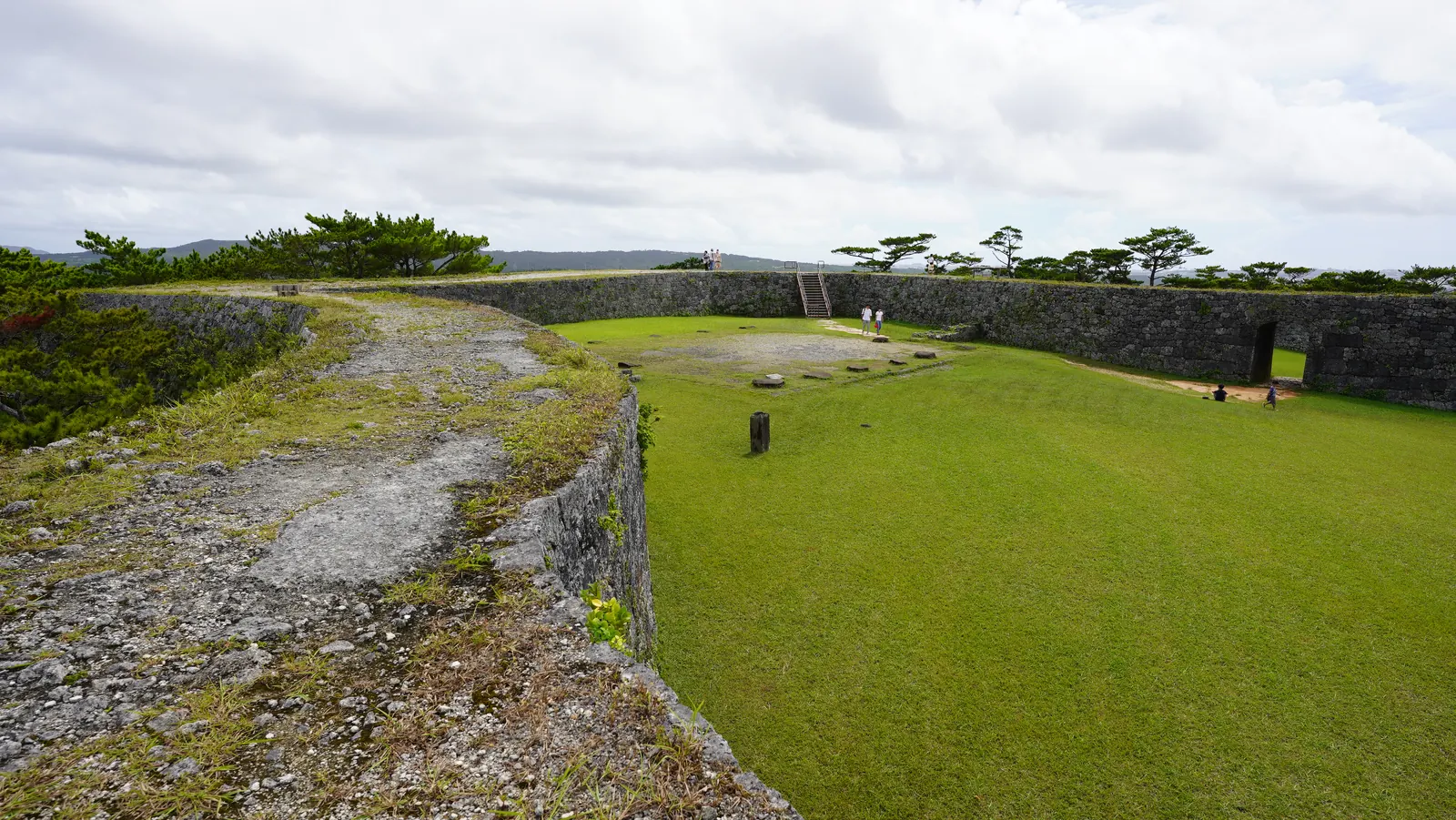
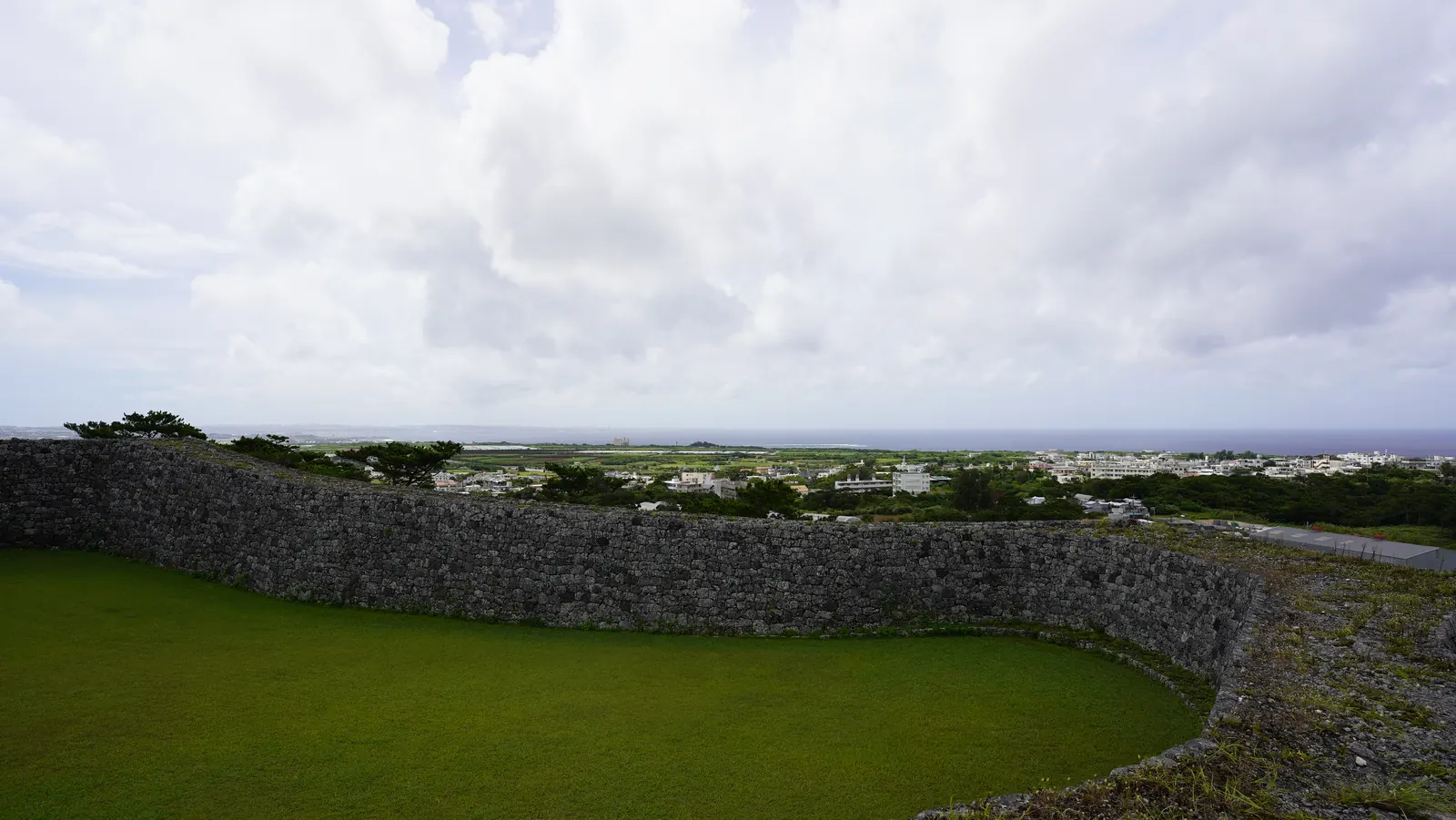
Zakimi is one of the nine sites inscribed as the Gusuku Sites and Related Properties of the Kingdom of Ryukyu, the same World Heritage listing as Shuri and Nakijin. Unlike either of them, it has no ticket office, no opening hours and no closing day. You park, you walk in.
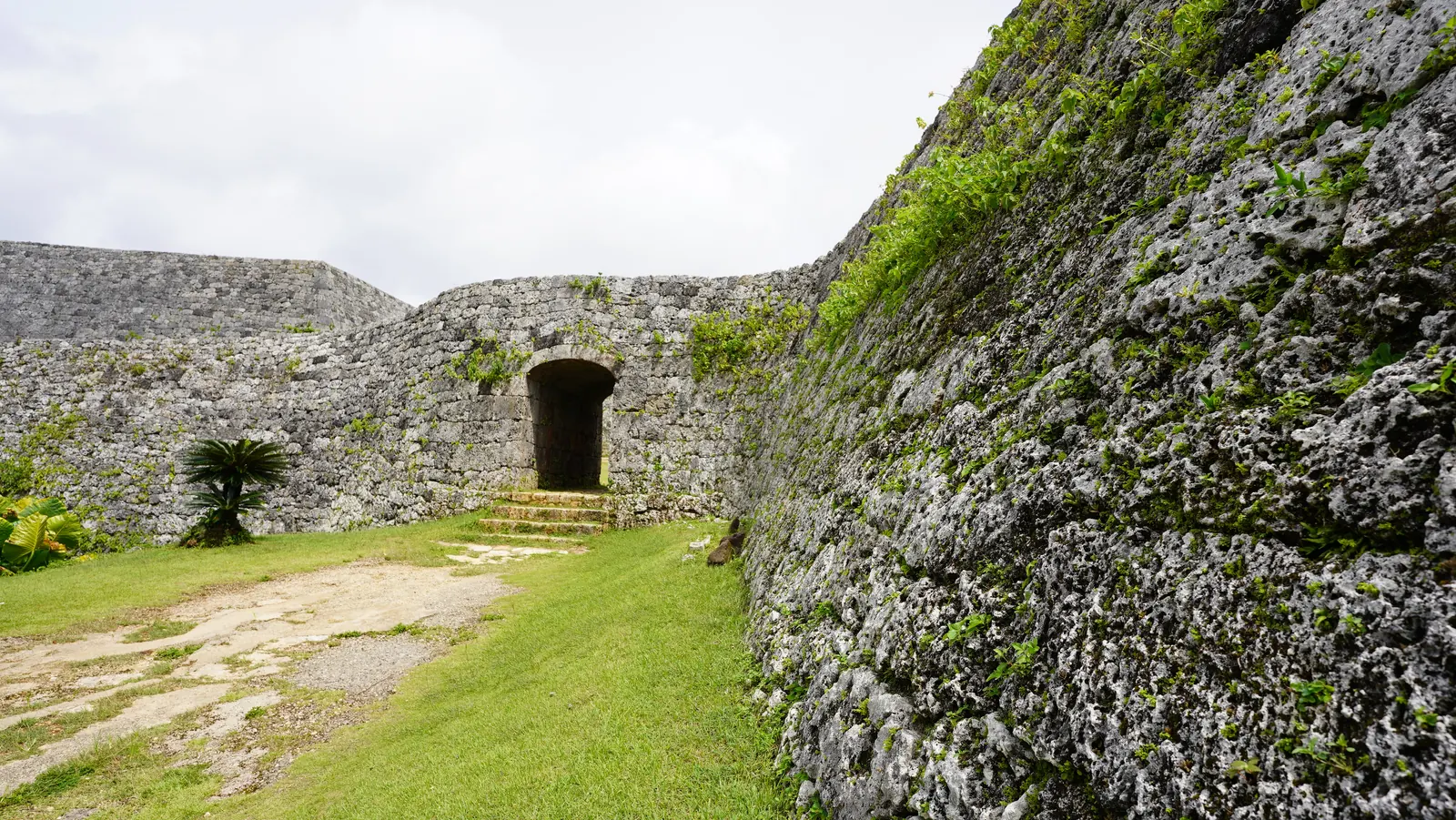
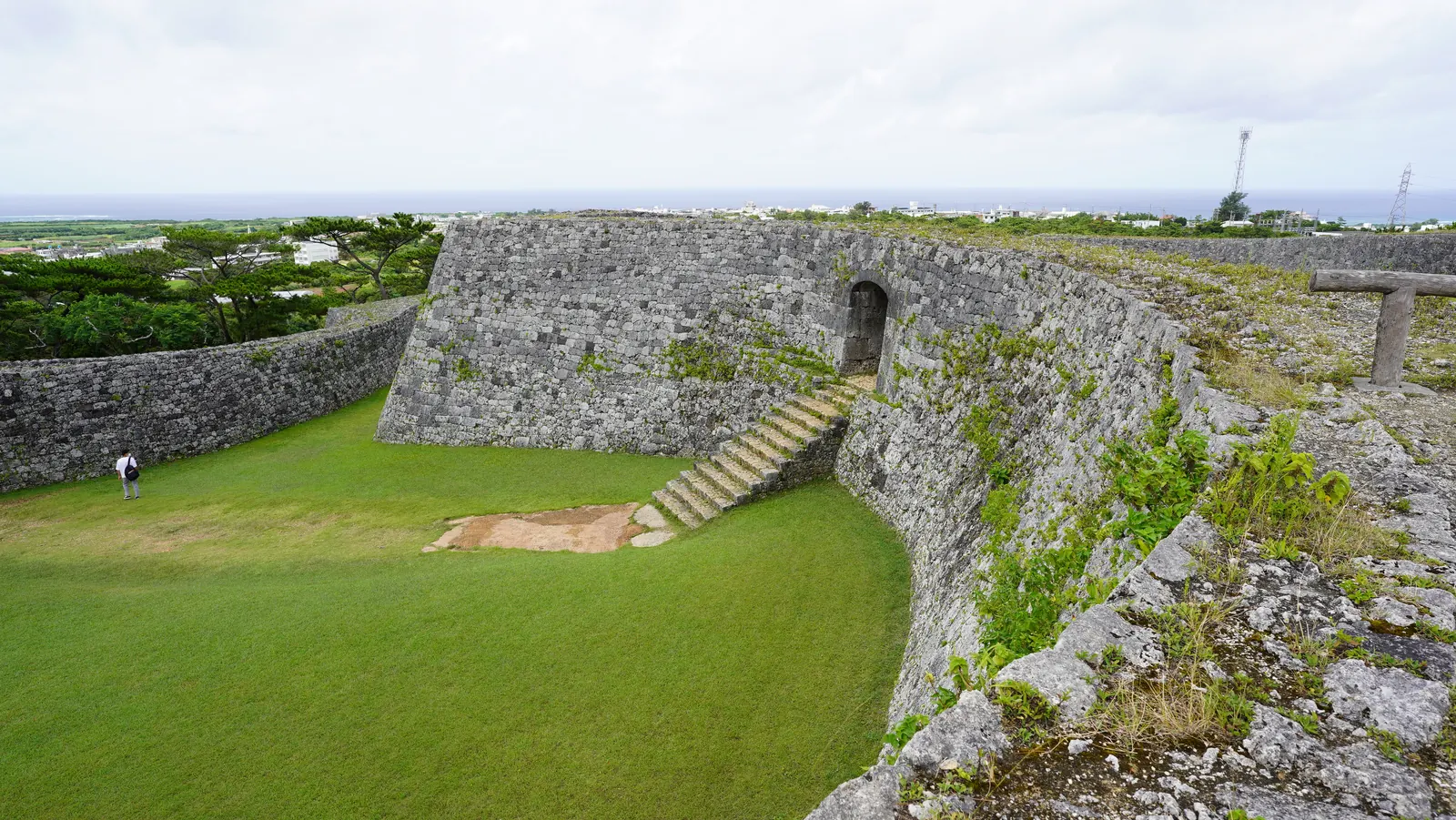
It was built between 1416 and 1422 by Gosamaru, the lord of Yomitan and the most celebrated castle builder of the Ryukyu Kingdom. Its two arch gates are the oldest surviving stone arches in Okinawa, and the wall line curves rather than runs straight. It follows the ground instead of correcting it.
The part people do not expect: you are allowed on top of the walls. Stone steps go up from the inner enclosure and the wall tops are wide enough to walk. There are no handrails and it is a genuine drop on the outer side, which is the trade-off for being trusted with it. From up there you can see the East China Sea on one side and, on a clear day, the whole width of the island.
| Site | Adult | Notes |
|---|---|---|
| Zakimi Castle | Free | World Heritage. No ticket office, no closing day, free car park. |
| Yuntanza Museum | ¥500 | Elementary and junior high ¥300, over-65s ¥400. Village residents pay ¥200 / free / ¥160. Open 9:00–18:00, last entry 17:30, closed Wednesdays and 28 Dec–4 Jan. |
| Nakijin Castle | ¥1,000 | Same World Heritage listing. Raised from ¥600 in September 2025. |
| Shuri Castle | ¥400 | Same listing. Rises to ¥1,000 on 23 November 2026. |
| Cape Zanpa lighthouse | ¥300 | Junior high age and above. Under-12s free. |
Okinawa's kilns were gathered into one district of Naha, Tsuboya, in 1682, and stayed there for three centuries. By the 1970s that had stopped working. Tsuboya had become dense inner-city housing, and wood-fired climbing kilns produce a great deal of smoke.
The potter Jiro Kinjo moved out to Yomitan in 1972. In 1980 four mid-career potters built a shared climbing kiln here, and the ware from it took the name Yomitanzan-yaki; a second and larger kiln, the thirteen-chambered Kita-gama, followed in 1992. The quarter grew around them and now holds nineteen independent studios. Kinjo was named a Living National Treasure in 1985, the first in Okinawa.
It is worth knowing this before you arrive, because it explains what the place is. It is not a tourist attraction that sells pottery. It is a working production site that allows visitors. The studios keep their own hours, some are shut when the kiln is being fired, and the lanes between them are just lanes. Prices run from a few hundred yen for a small piece to a great deal more for a named potter.
Cape Zanpa is the westernmost point of this part of the island, a flat limestone headland with a white lighthouse on it. At about 31 metres, it is the tallest in the Nansei islands. It is one of only a handful in Japan that the public can climb, and the view from the gallery covers the whole coast.
The hours changed on 1 March 2026, and the change matters: it now closes between 12:00 and 13:00. Arrive at half past twelve (which is exactly when people arrive, having driven up after a late morning at the castle) and you will find it shut. Almost no English guide has caught this yet.
The headland itself, the park around it and the cliff path are open at all times and cost nothing. The ¥300 is only for going up the tower.
Banta Cafe is built onto the rocks at Gima, a few minutes south of the cape, a Hoshino Resorts operation with seating out on the shoreline rather than behind glass. It is the one place in the village that is unambiguously designed for visitors, and it is very good at it.
Its hours are the part worth writing down. It opens at 10:00 on weekdays and 8:00 at weekends and holidays, takes last orders at sunset, and closes an hour after that. Which means the closing time moves by well over an hour across the year, and why the café's own site posts today's sunset time on its front page. If you are going for the light, that page is the timetable.
About 50 minutes north of Naha Airport on Route 58, or 30 minutes from Chatan. Everything here has free parking, including the castle.
There is no expressway exit for Yomitan. Route 58 is the road.
The 28 and 29 run from Naha Bus Terminal to Yomitan, leaving from stand 3. But both the castle and the pottery quarter are a long walk inland from the stops, around 30 minutes on foot from Kina.
Realistically this is a village you drive to.
Kina Banjo is on the same road and takes fifteen minutes. Onna and the resort coast start immediately north.
Castle plus pottery plus the cape is a comfortable half day.
Yes. No admission, no ticket office, no closing day, and free parking. It holds the same World Heritage listing as Shuri and Nakijin, both of which charge. The only charge on the site is the Yuntanza Museum next to it: ¥500 for high school age and above, ¥300 for elementary and junior high, ¥400 for over-65s, with lower rates for village residents. Listings that put a price on the castle have confused the two.
Yes, and it is the reason to come. Stone steps lead up from inside and the wall tops are wide enough to walk along. There are no handrails and no barrier on the outer edge, and the stone is uneven. Fine for most adults, not a place to let small children run ahead. Shoes with grip help more than you would expect on a flat site.
9:30–12:00, then 13:00 onwards. It closes for an hour at midday. Afternoons run to 17:30 on weekends and holidays from March to September, and to 16:30 on weekdays and all through October to February. Last entry is 20 minutes before each close. These hours took effect on 1 March 2026; older listings show a single continuous session. ¥300 for junior high and above.
Broadly 9:30–17:30, but the quarter is around nineteen independent studios and each keeps its own hours and days off. Some close while a kiln is being fired. The lanes and the grounds are open regardless, and cost nothing to walk. Going on a weekday morning gives you the best chance of finding most doors open.
Biased answer: we live here. Unbiased version: if you are driving between Naha and the resort coast you pass within two kilometres of a free World Heritage castle you are allowed to climb on, and most people do not stop. Half a day covers the castle, the pottery quarter and the cape. If you only have an hour, make it the castle.